Sunny Pollinator Paradise
Transform your sun-baked border into a buzzing haven for bees, butterflies, and beneficial insects with this wildlife-focused planting scheme.

Michael Johnson
Founder & Head Gardener
Michael is the founder of Right Plant Right Place and a passionate gardener with several years of experience designing and maintaining gardens.
Expertise
- Garden design
- Plant selection for challenging conditions
- Sustainable gardening practices
- Shade gardening
Full sun borders are often treated as problem areas-too hot, too dry, too harsh. But for pollinators, they’re paradise. The warmth that makes plants struggle is exactly what bees and butterflies need to thrive. A south-facing spot that bakes in summer isn’t a limitation; it’s the foundation for a garden that hums with life from spring to autumn.
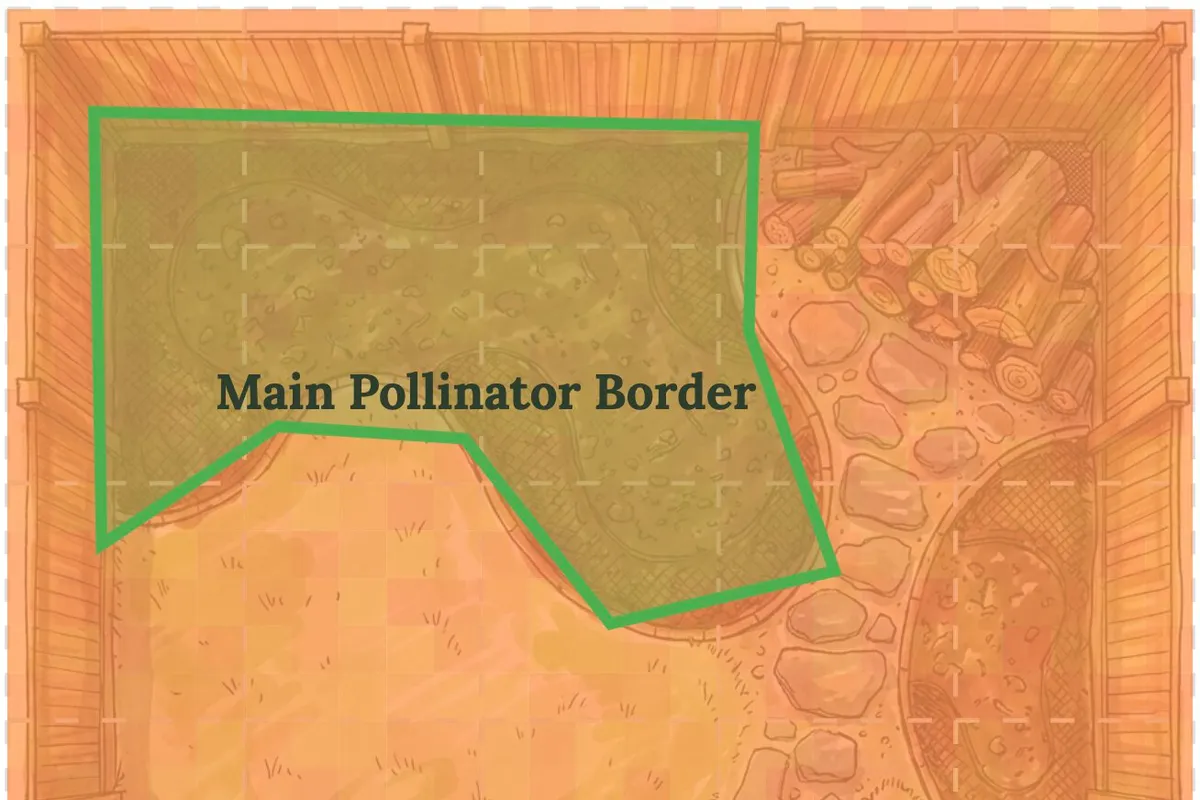
This 4.7m² border started as a blank canvas. The goal was straightforward: create a planting scheme where every plant earns its place by feeding pollinators, while still looking beautiful through the seasons. Wildlife-focused doesn’t have to mean wild-looking-though in this case, a naturalistic meadow style felt right.
Building the Back Layer
With a 2.16m depth to work with, layering was essential. The back layer needed plants tall enough to create a backdrop (1m or taller) while providing serious pollinator value. Native wildflower-style perennials were the obvious starting point.
Achillea filipendulina ‘Cloth of Gold’ emerged as the backbone plant. Yarrows are legendary pollinator magnets-their flat flower heads act like landing platforms for hoverflies, butterflies, and bees. The bright golden yellow creates a warm, sunny backdrop from June through September, and the fine ferny foliage adds texture throughout the growing season. At 1.2m tall, it anchors the back of the border without overwhelming it.
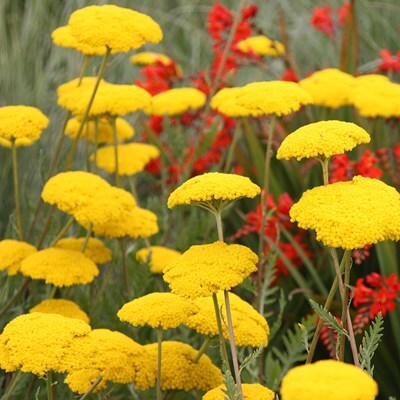
Achillea filipendulina 'Cloth of Gold' — Jun-Sep
Deep yellow flat flower heads on 1.2m stems. Fine ferny foliage. Drought-tolerant and long-flowering, perfect for structural repetition.
Classic meadow yarrow-a pollinator workhorse
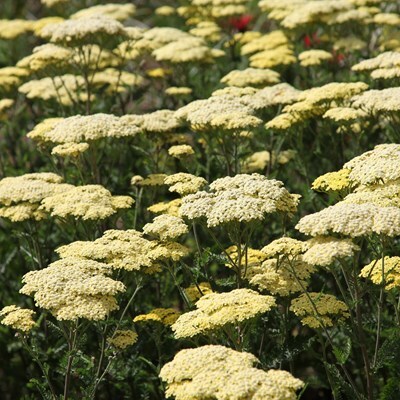
Achillea 'Credo' — Jun-Sep
Yellow fading to cream, same excellent pollinator value. Works beautifully alongside stronger colours without competing.
Softer yellow for gentler colour blending
For late-season nectar, Knautia macedonica ‘Melton Pastels’ was essential. The pincushion flowers in shades of pink, rose, and crimson bloom from July right through to October-crucial food for pollinators when other plants are finishing. At 1m tall with an airy, semi-transparent habit, it sits beautifully between the solid yarrow and the middle layer.
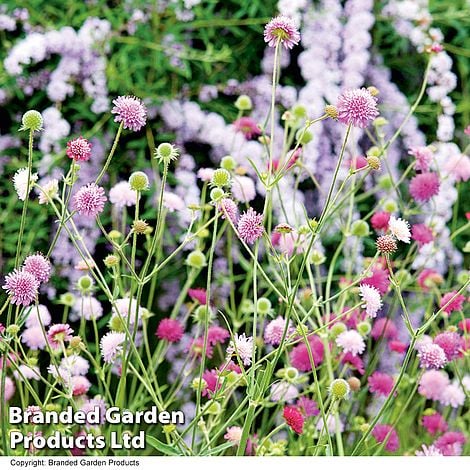
Knautia macedonica 'Melton Pastels' — Jul-Oct
Pincushion flowers in pink, rose, and crimson on slender stems. Bees and butterflies adore them-and they keep flowering when many plants have given up.
Crucial late-season nectar source
Adding Vertical Drama with Hyssops and Mulleins
The back layer needed more than just flat flower heads and pincushions. Vertical spikes add architectural interest and attract different pollinators-bumblebees particularly love tubular flowers they can crawl into.
Agastache ‘Blue Boa’ provides exactly this. The violet-blue flower spikes appear from June and keep going until October, creating five months of continuous nectar production. The anise-scented foliage is a bonus, and at 1m tall the spikes sit perfectly behind lower plants while remaining visible throughout the border.
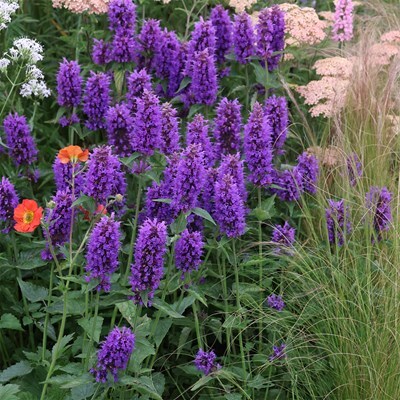
Agastache 'Blue Boa' PBR — Jun-Oct
Deep violet-blue flower spikes beloved by bees. Anise-scented foliage. One of the longest flowering periods of any pollinator plant.
Five months of violet-blue spikes
The colour palette was building-golden yellows from the achillea, pink-rose from the knautia, violet-blue from the agastache. What was missing was height drama. Verbascum ‘Gainsborough’ provides exactly that: pale primrose-yellow spires reaching 1.5m tall, flowering from May to August. Mulleins are short-lived perennials but self-seed readily in naturalistic settings, which suits a wildlife garden perfectly. The silver-grey foliage rosettes look good even when the plant isn’t flowering.
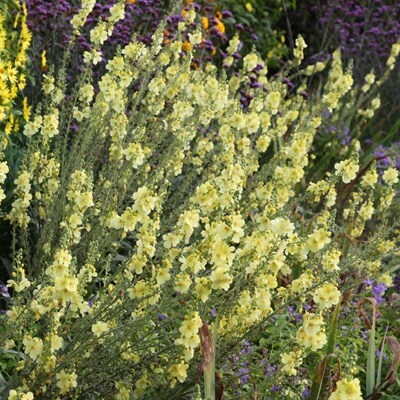
Verbascum 'Gainsborough' — May-Aug
Pale primrose-yellow spikes to 1.5m with grey-green foliage. Starts flowering in May, earlier than most tall perennials.
Tall candelabra spikes for back-of-border drama
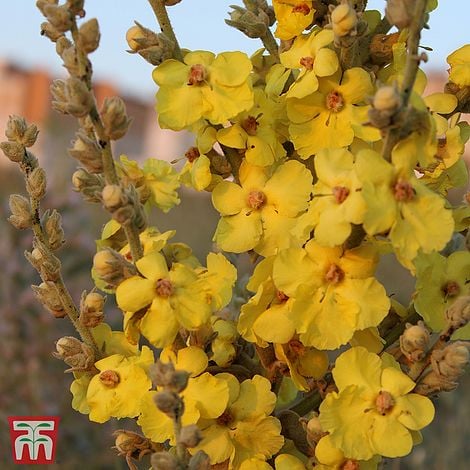
Verbascum phlomoides 'Banana Custard' — Jun-Aug
Rich yellow flower spikes above dramatic silver foliage rosettes. A showstopper option if you want maximum height.
Even taller at 1.8m for real impact
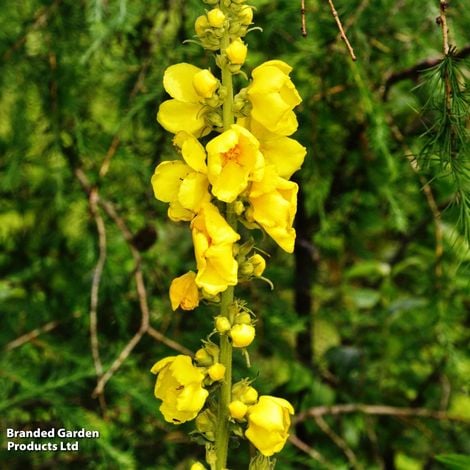
Verbascum olympicum — Jun-Aug
Buttery yellow branching candelabras. Silver felted foliage year-round. This is the dramatic statement option for a dominant focal point.
The tallest at 2m-spectacular focal point
I went with Verbascum ‘Gainsborough’ for its softer colour and earlier flowering-it starts in May when the achillea and agastache are still building up. The pale primrose yellow echoes the golden yarrows without matching them exactly, creating variation within the warm palette.
Year-Round Structure: Rock Roses and Oregon Grape
A pollinator border that disappears completely in winter is a missed opportunity. Evergreen structure provides shelter for overwintering insects and prevents the border from looking abandoned for five months of the year.
Rock roses (Cistus) are Mediterranean shrubs that thrive in exactly the hot, dry conditions this border offers. They’re evergreen, mounding, and produce masses of open flowers in early summer that bees find irresistible. Cistus × purpureus ‘Alan Fradd’ has white petals with dramatic burgundy markings at the base-the markings echo the pink tones of the knautia beautifully.
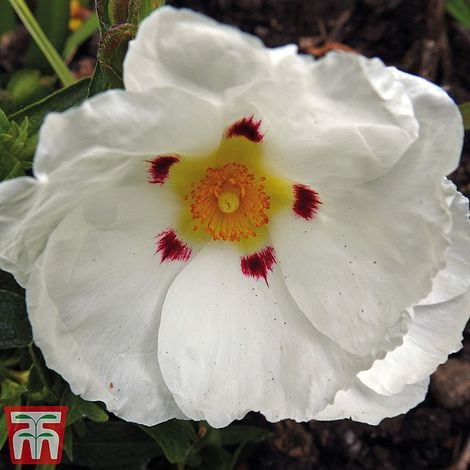
Cistus × purpureus 'Alan Fradd' — Jun-Jul
White papery flowers with deep burgundy blotches. Evergreen mounding habit at 1m × 1m. Drought-tolerant and totally reliable.
Dramatic white flowers with burgundy markings
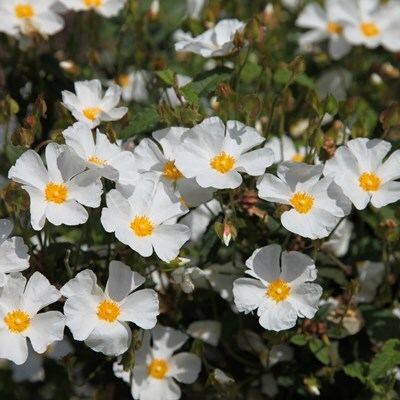
Cistus × hybridus — Jun-Jul
White flowers with yellow centres emerging from crimson buds. Mounding evergreen at 0.9m. Perhaps the most reliable Cistus for British gardens.
One of the hardiest rock roses
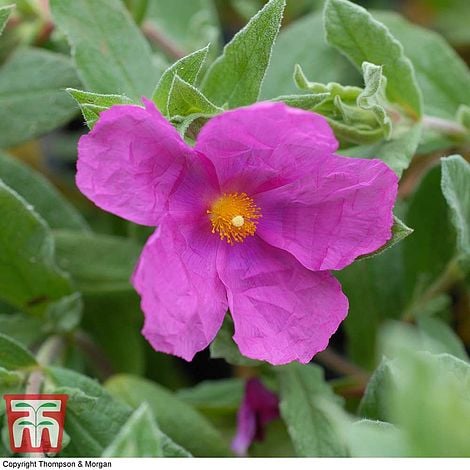
Cistus × pulverulentus 'Sunset' — Jun-Aug
Bright pink tissue-paper blooms on a low spreading shrub. Grey-green evergreen foliage adds year-round interest.
Bright pink option with grey-green foliage
For the critical spring gap, Mahonia aquifolium (Oregon Grape) was the solution. Its yellow flowers appear in March to May when almost nothing else is blooming-essential food for emerging bumblebee queens. The holly-like evergreen foliage provides year-round structure and shelter, the coarse texture contrasts brilliantly with the fine-textured perennials, and the autumn berries feed birds. It’s a genuine multi-season wildlife plant.
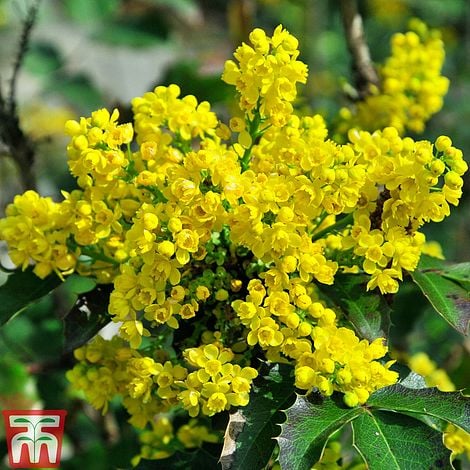
Mahonia aquifolium — Mar-May
Yellow flower clusters when almost nothing else is blooming. Blue-black berries for birds in autumn. Bold architectural evergreen foliage year-round.
Critical early spring nectar for emerging bees
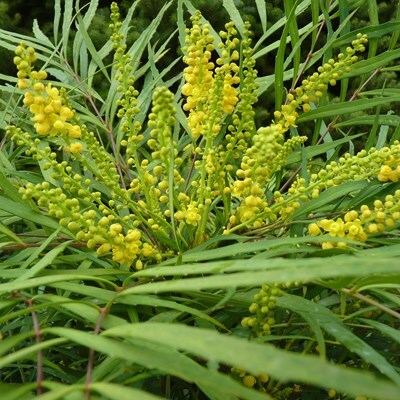
Mahonia eurybracteata 'Soft Caress' — Aug-Oct
Unlike typical spiky mahonias, this has soft feathery foliage. Flowers August to October for different seasonal coverage.
Softer foliage, late-season flowering
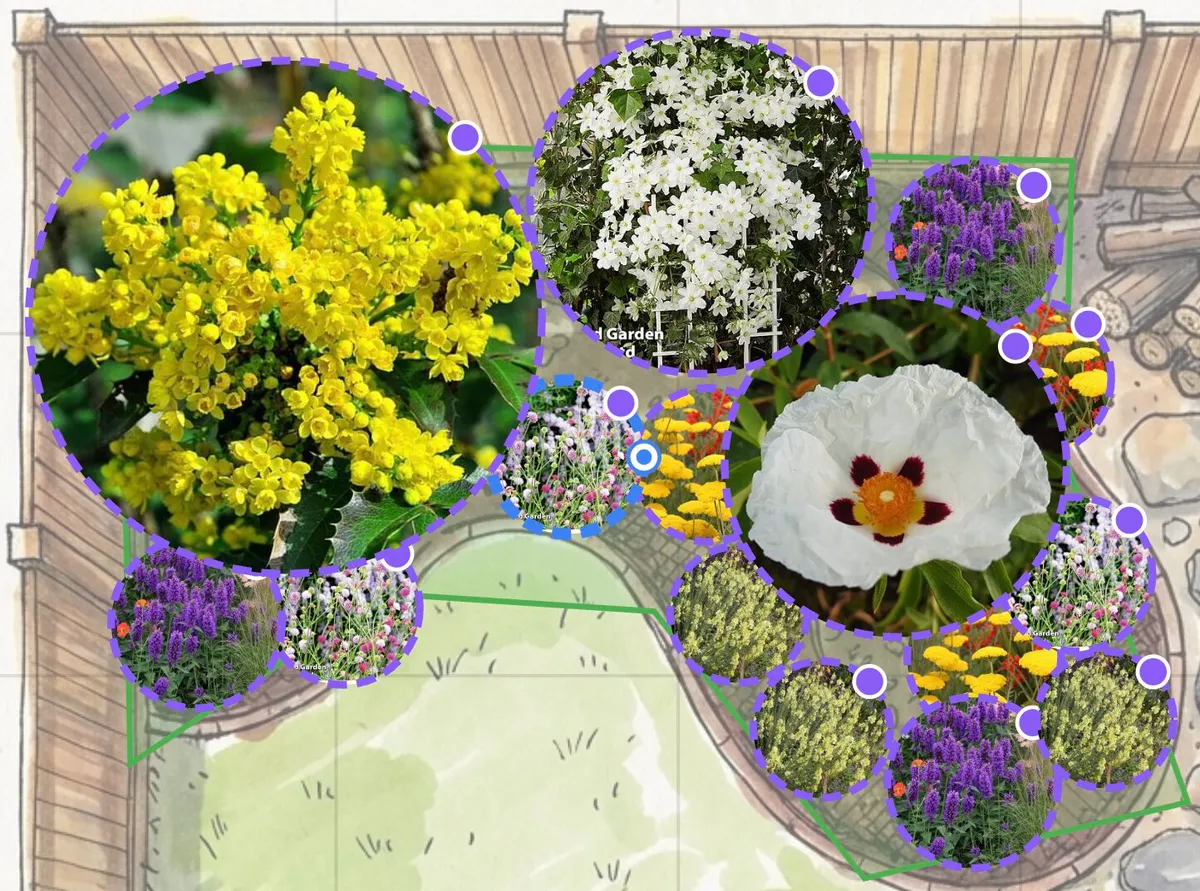
The Final Planting Scheme
The finished border covers nine months of continuous flowering:
March–May: Mahonia provides early nectar for emerging bumblebee queens, with the cistus building up its evergreen presence.
May–August: Verbascum spikes start the show in May, joined by achillea’s golden platforms from June. The cistus flowers heavily in June and July.
June–October: Agastache takes over as the workhorse, flowering for five solid months. Knautia joins in July and keeps going until frost.
The colour palette holds together through all this: golden yellows (achillea, mahonia, verbascum), pink-rose-crimson (knautia, cistus markings), and violet-blue (agastache). The white cistus flowers add brightness without disrupting the warm theme.
For pollinators, the flower shapes offer variety: flat platforms (achillea) for hoverflies and small bees, tubular spikes (agastache) for bumblebees, open cups (cistus) for everything, and pincushions (knautia) for butterflies.
Making It Work for Your Garden
This scheme works for any sunny border of similar size, though you might adjust the quantities based on your exact dimensions. The key principles transfer regardless:
Start with the structural backbone-one or two evergreen shrubs that provide year-round presence and fill critical early-season gaps. Then layer in your perennial workhorses, thinking about height progression from back to front. Mix flower shapes to attract different pollinators, and overlap flowering times so there’s never a gap in nectar availability.
The plants here are all readily available at garden centres or online nurseries. None require special treatment-they’re chosen specifically because they thrive on neglect in sunny, well-drained spots. Once established, a border like this needs minimal intervention: perhaps a tidy-up in early spring to remove dead stems, and occasional division of perennials every few years.
The real reward comes in summer, when you can sit and watch the constant traffic of bees working the achillea heads, butterflies drifting between the knautia flowers, and hoverflies patrolling between plants. A garden that feeds wildlife feeds something in us too.
Want to plan a pollinator border for your own garden? Try the Right Plant Right Place planting tool to find the perfect plants for your conditions.
Ready to plan your garden?
The Right Plant Right Place app can analyse your specific garden conditions and suggest plants that will thrive in your space.
Get Started Free