Sun-Kissed Prairie Border
Capture the wild beauty of a summer meadow with this naturalistic planting scheme. Grasses sway in the breeze while perennials rise and fall in waves of colour. It looks effortless, but every plant is chosen to thrive in your sunniest conditions.

Michael Johnson
Founder & Head Gardener
Michael is the founder of Right Plant Right Place and a passionate gardener with several years of experience designing and maintaining gardens.
Expertise
- Garden design
- Plant selection for challenging conditions
- Sustainable gardening practices
- Shade gardening
Full sun borders are the envy of shade gardeners, but all that light comes with its own challenge: how do you create something that looks natural rather than a jumble of sun-hungry flowers competing for attention? The answer lies in prairie planting, a style that embraces the wild beauty of meadows by combining ornamental grasses with waves of perennials.
This border measures just under 3m² with a generous 2.45m depth, which allows for proper front-to-back layering. The full sun exposure opens up the entire palette of prairie-style plants, from towering grasses that catch the light to sturdy coneflowers that bloom for months on end.
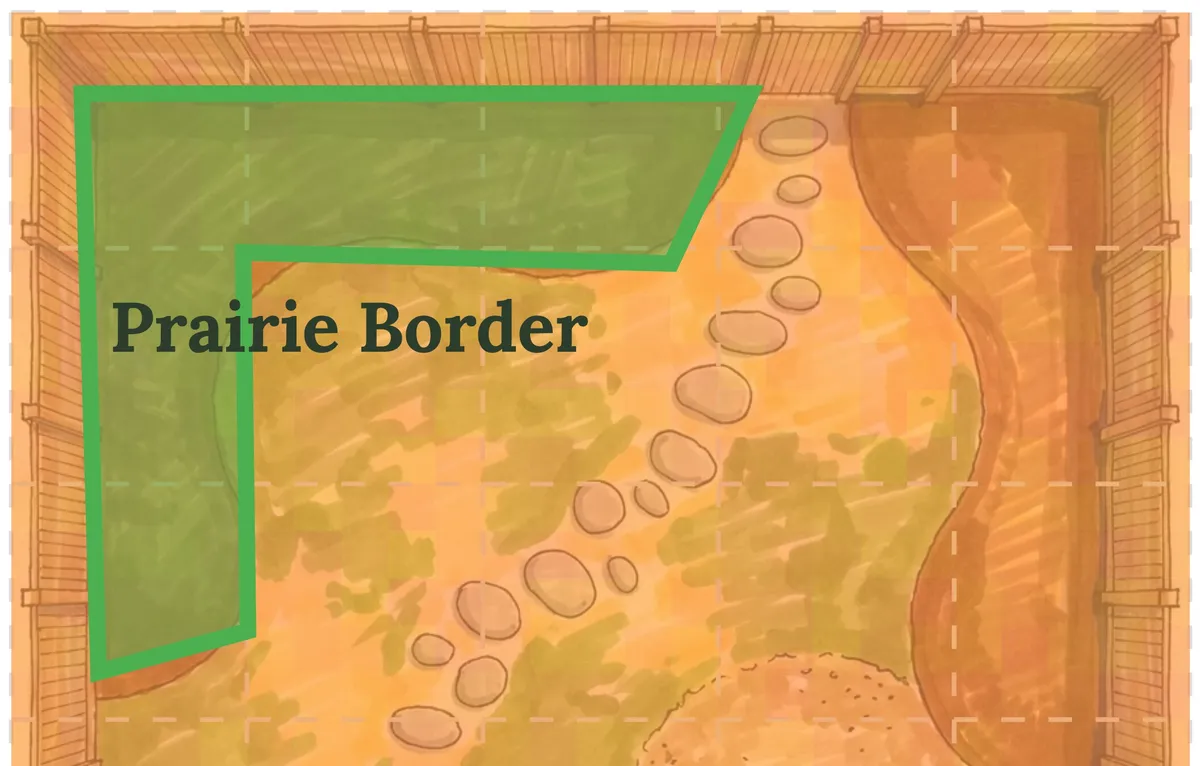
Building the Structural Backbone
Every prairie border needs grasses to provide structure, movement, and year-round interest. Without them, the perennials would look flat and static. The grasses are what make prairie planting feel alive.
For a border this size, two grasses create the essential framework. At the back, something tall and transparent works best because it allows you to see through to plants behind while still providing vertical presence. In the middle layer, a more compact grass provides rhythm and connects the front and back of the border.
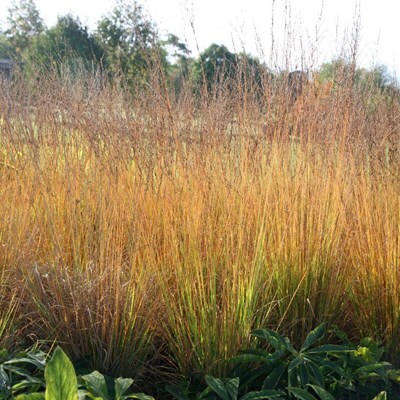
Molinia caerulea subsp. arundinacea 'Transparent' — Aug-Oct
At 2m tall with only 0.8m spread, this grass creates a see-through veil at the back of the border. Purple flower sprays appear in late summer and the foliage turns amber in autumn.
Transparent lives up to its name with airy flower stems you can see through
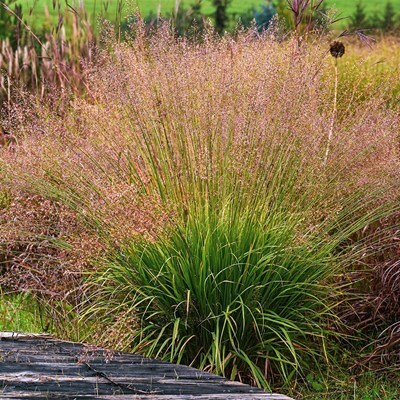
Molinia caerulea 'Banshee' — Jul-Sep
At 1m tall with a narrow 0.7m spread, this compact moor grass works perfectly in the middle layer. The purple-pink flowers echo the taller Transparent behind.
Banshee provides mid-height structure with purple-tinted flowers
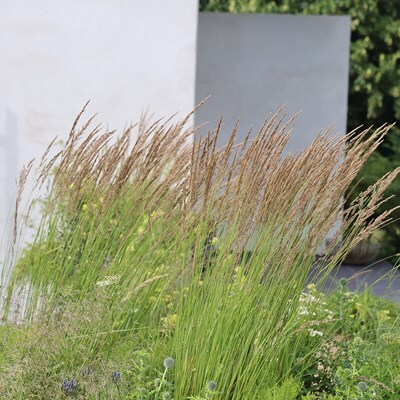
Calamagrostis × acutiflora 'Karl Foerster' — Jun-Aug
Another excellent option at 1.8m tall. Its narrow, upright profile and early flowering make it ideal for repetition, and it stands tall through winter.
Karl Foerster provides reliable vertical structure from early summer
The combination of Molinia ‘Transparent’ at the back and Molinia ‘Banshee’ in the middle creates purple vertical lines at different heights, giving the border rhythm without repetition becoming monotonous.
Adding Coneflowers for Colour
With the grass structure in place, the border needed colour from prairie classics. Echinacea and Rudbeckia are the obvious choices because they flower for months, thrive in full sun, and their forms contrast beautifully with the fine-textured grasses.
I considered dozens of varieties, but the key decision was colour. The purple grasses suggested a complementary palette: gold Rudbeckias to provide warm contrast, and white Echinaceas to create breathing space between the purples and golds.
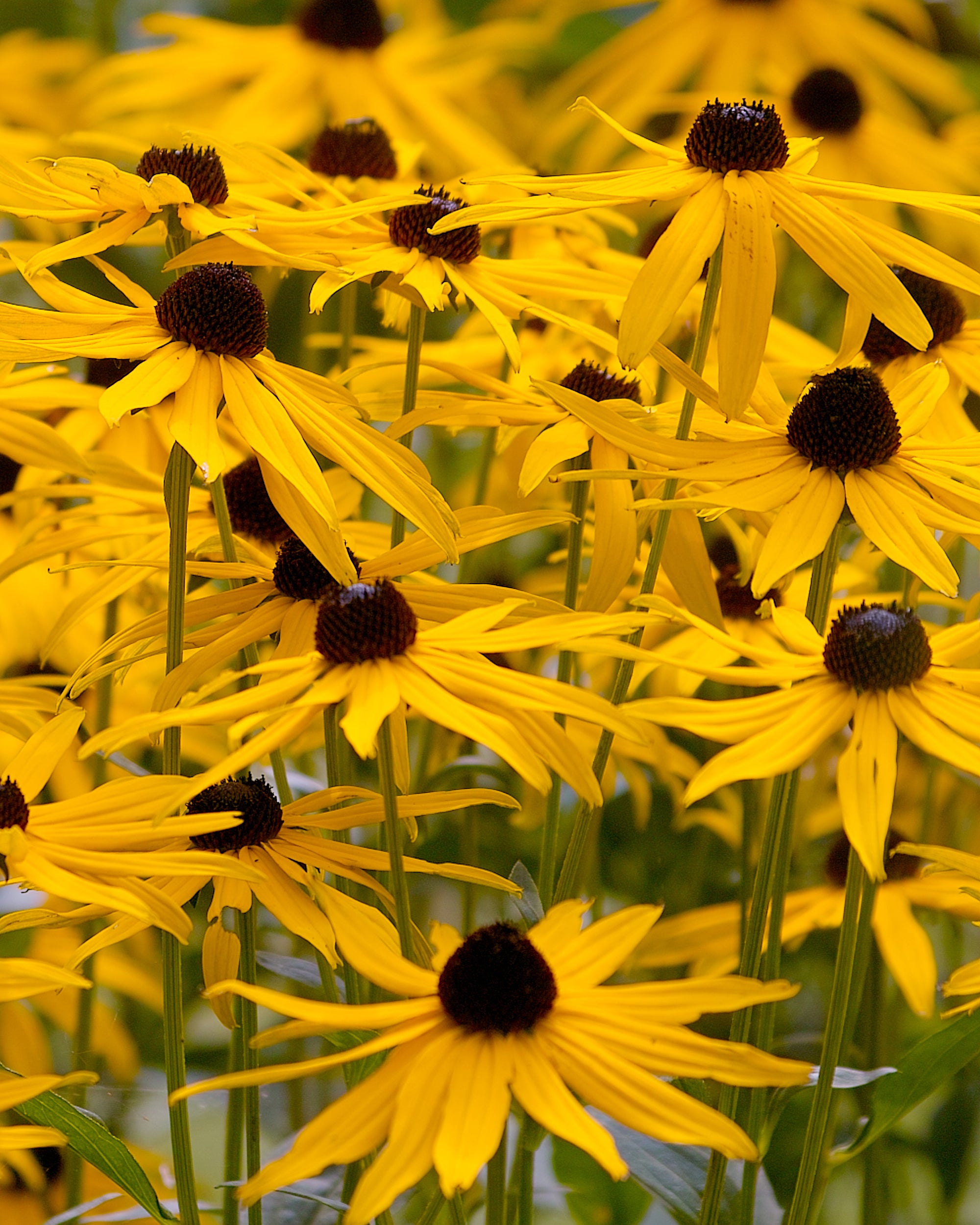
Rudbeckia 'Goldsturm' — Aug-Sep
The definitive prairie coneflower at 0.35m, perfect for the front edge. Masses of golden-yellow flowers contrast beautifully with purple grasses.
Goldsturm's golden daisies are the essential prairie workhorse
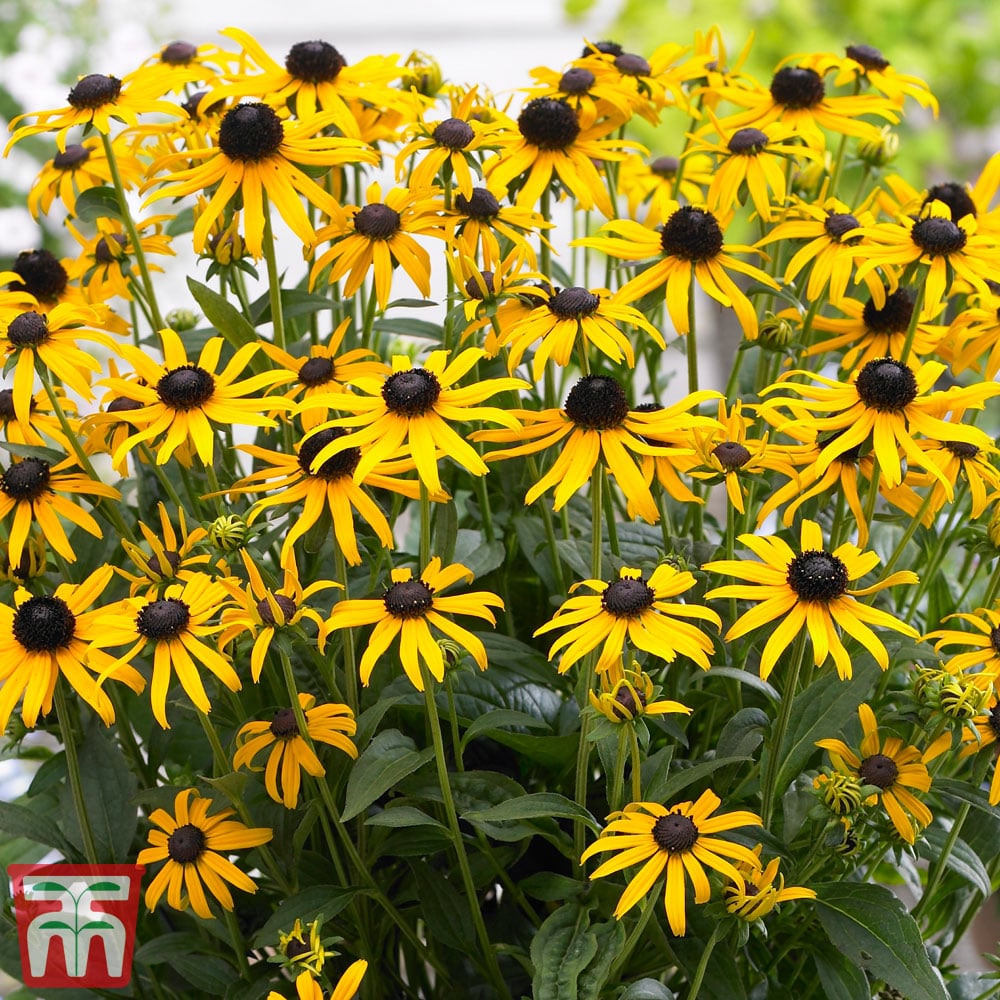
Rudbeckia fulgida 'Little Goldstar' — Jul-Oct
Extended flowering from July to October makes this particularly valuable. At 0.5m it sits just behind the shorter Goldsturm.
Little Goldstar offers the longest flowering period of the Rudbeckias
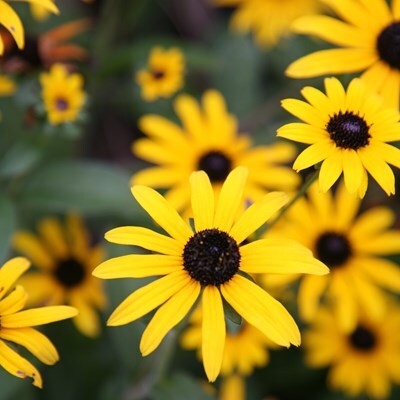
Rudbeckia fulgida var. deamii — Aug-Oct
The species form at 0.6m has a more natural, wild appearance that suits prairie style particularly well.
The species form brings a wilder, more natural character
Rudbeckia ‘Goldsturm’ was the obvious choice for the front edge because its compact 0.35m height tucks neatly below the grasses while providing that essential golden colour.
White Echinaceas for Contrast
The purple-and-gold combination needed something to prevent it becoming overwhelming. White flowers provide breathing space and create visual movement, drawing the eye through the border rather than letting it rest on one block of colour.
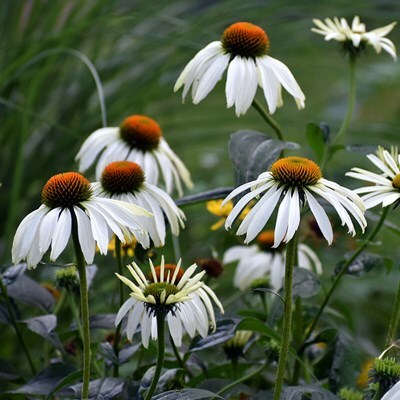
Echinacea purpurea 'White Swan' — Jun-Sep
Classic white coneflower at 0.6m with pure white petals and orange-brown centres. Starting in June, it bridges the gap before Rudbeckias begin.
White Swan starts the Echinacea season in June
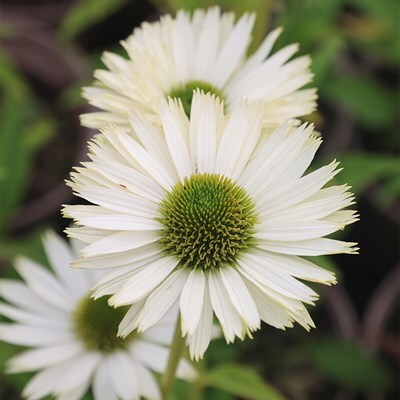
Echinacea purpurea 'Virgin' — Jul-Oct
Pristine white with greenish undertones and extended July-October flowering. Slightly more compact spread at 0.5m.
Virgin offers the longest flowering and subtle greenish tones
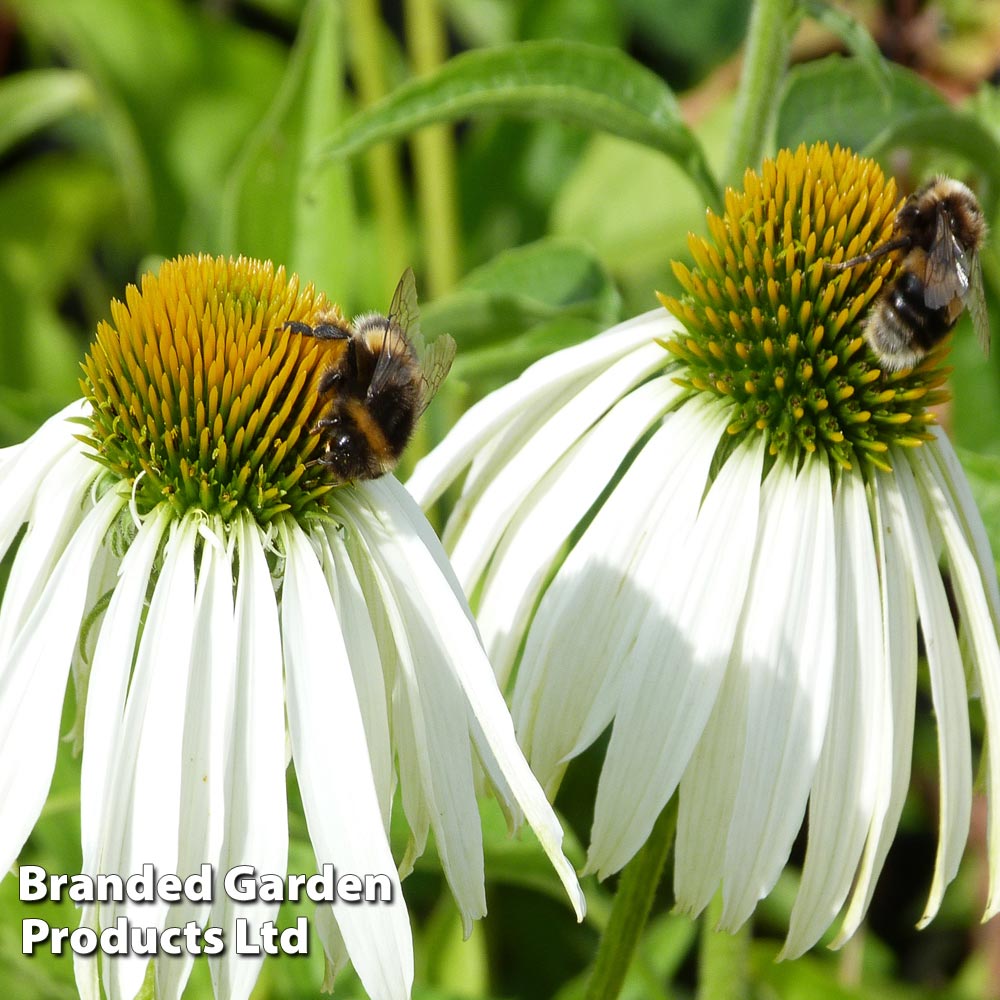
Echinacea purpurea 'Alba' — Jul-Sep
The tallest white at 0.9m with honey-coloured centres. Its coarse texture provides excellent contrast to the fine-textured grasses.
Alba's 0.9m height echoes upward toward the tall grasses
The combination of Echinacea ‘Alba’ at 0.9m and ‘White Swan’ at 0.6m creates white at two heights, drawing the eye upward from the front Rudbeckias toward the back grasses.
Filling the Spring Gap
Analysis of the flowering calendar revealed a significant problem: nothing flowered before June. In a prairie border, spring should feel like an awakening, not three months of bare soil waiting for summer.
When searching for early purple perennials to echo the Molinia theme, Nepeta (catmint) emerged as the perfect alternative. It provides fine-textured purple spikes, flowers from June onwards, and attracts pollinators throughout summer.
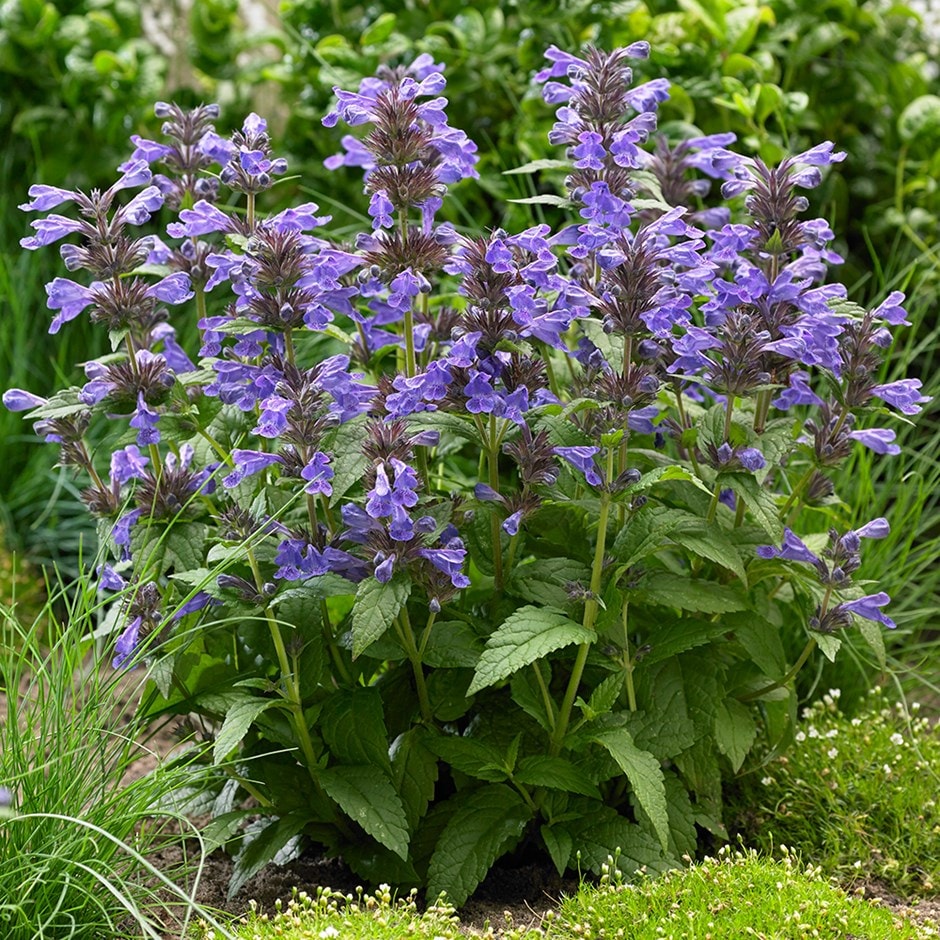
Nepeta 'Neptune' — Jun-Sep
A compact catmint at 0.3m tall with blue-purple flowers. Its mounding habit softens the front edge and echoes the purple Molinias.
Neptune's compact size makes it perfect for front-edge planting
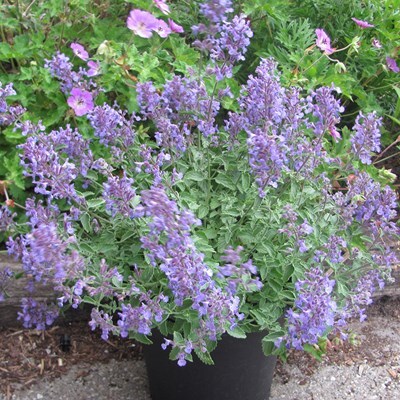
Nepeta × faassenii 'Junior Walker' — Jun-Sep
At 0.4m with silvery-green aromatic foliage, this catmint adds both colour and textural interest to the front of the border.
Junior Walker offers similar qualities with silvery-green foliage
Nepeta ‘Neptune’ at 0.3m fits perfectly at the front alongside the Rudbeckia, providing purple that echoes the back-layer Molinias and ties the colour scheme together.
The Essential Transparent Weavers
The initial analysis identified a critical gap: no transparent weavers. Prairie borders rely on see-through plants with airy stems that thread between other plants, creating that naturalistic drift effect. Without them, a deep border can look like soldiers lined up in rows.
Verbena bonariensis is the quintessential prairie weaver. Its wiry stems rise to 2m but occupy barely any ground space, threading purple flower heads through every layer of the border.
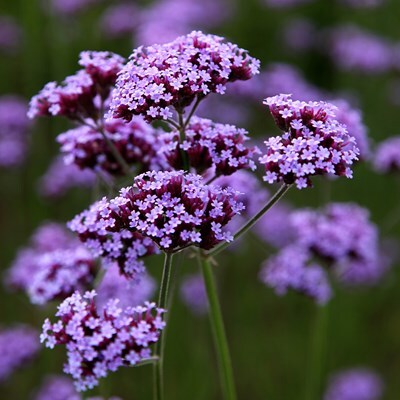
Verbena bonariensis — Jun-Oct
At 2m tall with only 0.45m spread, it rises through all layers creating purple columns you can see through. June-October flowering extends the season significantly.
The iconic prairie weaver with see-through stems
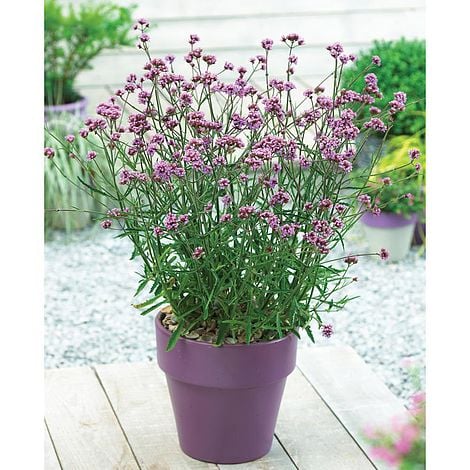
Verbena bonariensis 'Lollipop' — Jul-Oct
If space is tight, this 0.6m version has the same character but won’t dominate. Still transparent, still purple, still excellent for weaving.
A compact alternative for smaller spaces
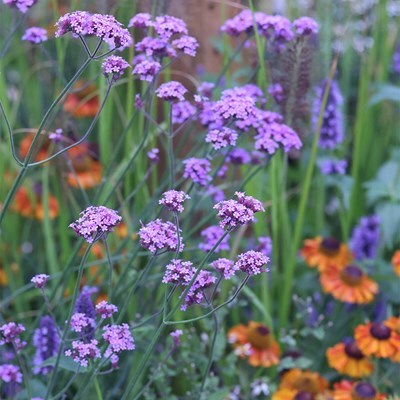
Verbena bonariensis 'Vanity' — Jun-Oct
At 0.7m, this cultivar provides weaving effect in the middle layer rather than the back. Purple-blue flowers from June onwards.
Vanity offers middle-layer weaving at 0.7m
The classic Verbena bonariensis was the clear choice. Its narrow spread means it barely takes up ground space, but its 2m height means it creates purple see-through columns that unify the entire border from front to back.
Extending into Autumn
The flowering calendar showed another gap: by October, only the Molinias were still providing interest. November dropped to nothing. For a prairie border to feel complete, it needs plants that extend the season into late autumn.
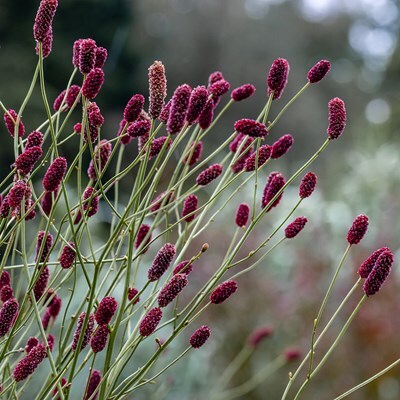
Sanguisorba 'Cangshan Cranberry' — Sep-Nov
At 2m tall, this burnet matches the Molinia height. Burgundy bobble flowers on wiry stems from September to November fill the critical late-season gap.
Cangshan Cranberry extends flowering right into November
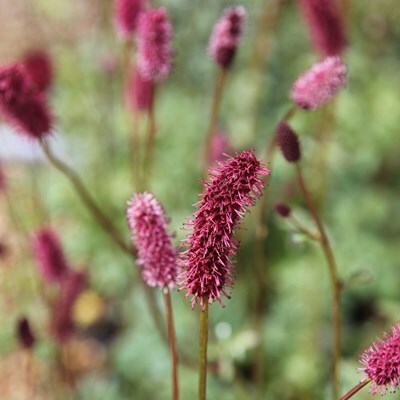
Sanguisorba menziesii — Jun-Sep
At 0.75m with red-purple flowers, this burnet weaves between Echinaceas and grasses. Its transparent stems add to the naturalistic effect.
Menzies' burnet weaves red-purple through the middle layer
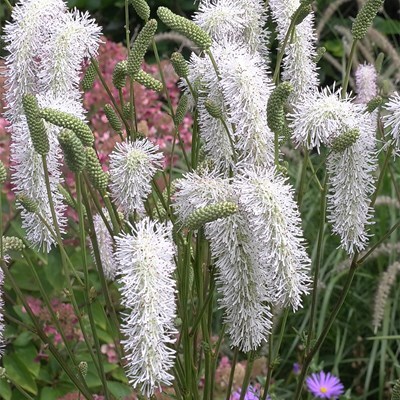
Sanguisorba 'White Brushes' — Jun-Sep
White flowers on transparent stems at 0.8m. This continues the white Echinacea theme while adding the weaving character of Sanguisorba.
White Brushes continues the white theme with airy texture
Sanguisorba ‘Cangshan Cranberry’ was the game-changer. Its September-November flowering fills the late-season gap completely, and its fine texture and transparent stems add to the naturalistic character without dominating the border.
The Transformation
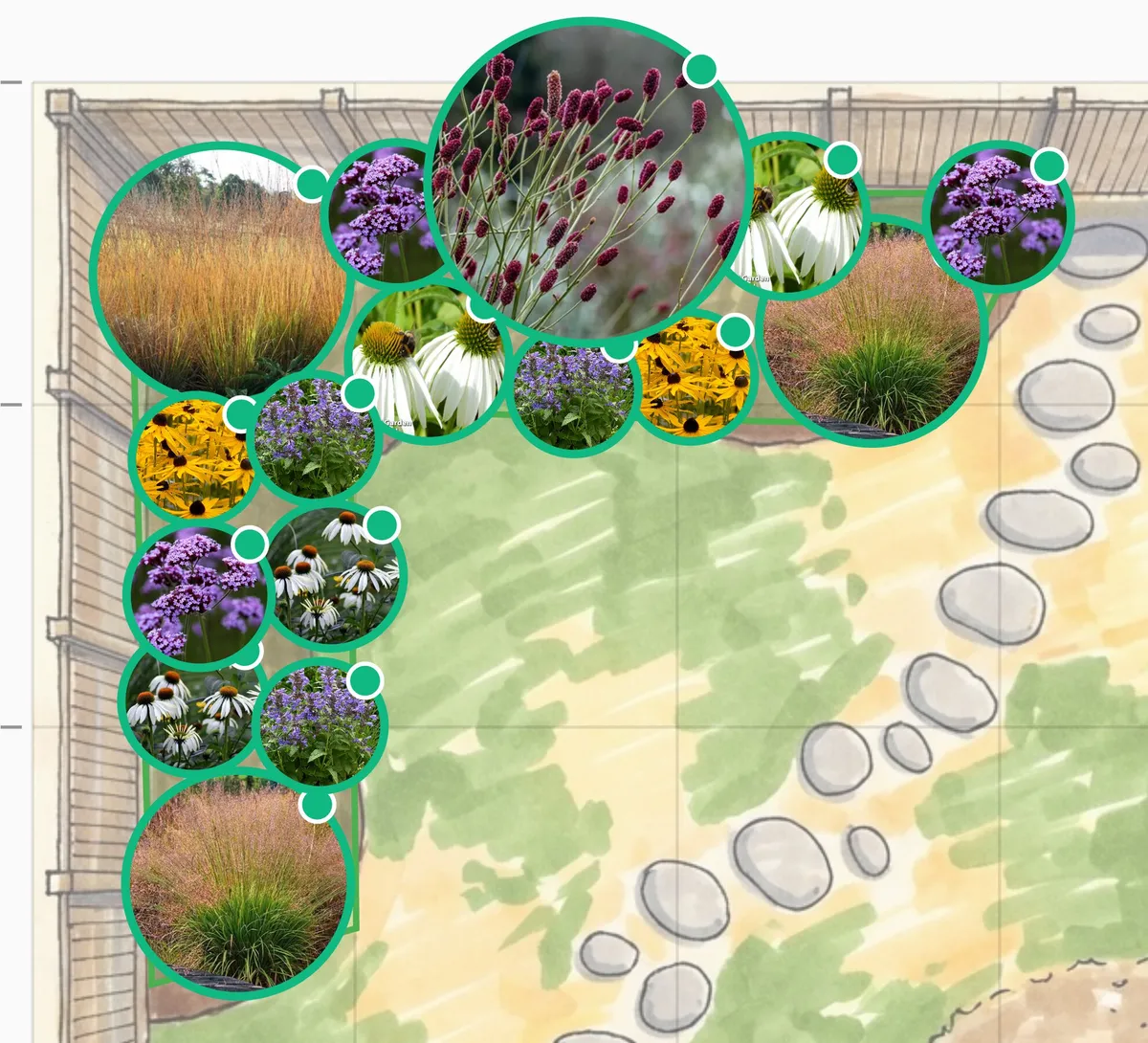
The completed border now provides interest for eight months of the year. The flowering calendar improved from 42% coverage (five months) to 67% coverage (eight months), with the critical October-November gap filled by Sanguisorba.
The purple-white-gold colour palette creates sophisticated harmony across all seasons. Purple appears at multiple heights through the Molinias, Nepeta, Verbena, and Sanguisorba. White provides breathing space via the Echinaceas. Gold grounds the front edge with Rudbeckias. All three colours echo front-to-back and top-to-bottom, creating unity without monotony.
The transparent weavers are what transforms this from a collection of plants into a prairie. The Verbena threads purple through every layer, the Sanguisorba adds fine-textured movement, and together they create that naturalistic drift effect where you’re never quite sure where one plant ends and another begins.
Making It Your Own
Your sunny border might have different dimensions or different soil, but the principles remain the same. Start with structural grasses for year-round interest and movement. Add perennials in complementary colours at different heights. Fill seasonal gaps with early and late-flowering plants. Most importantly, include transparent weavers to knit everything together into something that feels wild rather than planted.
If you have the space, repeat the key plants in groups of three or five. Prairie style thrives on rhythm, and seeing the same grass or coneflower appear at intervals creates visual continuity that draws the eye through the border.
The plants in this scheme were chosen through systematic searching, but the process of building up layers, checking flowering calendars, and adjusting for gaps is something you can do for any sunny border. Start with the structure, add the colour, fill the gaps, and weave it together.
Ready to plan your garden?
The Right Plant Right Place app can analyse your specific garden conditions and suggest plants that will thrive in your space.
Get Started Free