Sun-Drenched Cottage Border
A riot of colour and fragrance awaits in this sun-loving cottage garden. Blousy blooms tumble over one another while bees drift between flowers - this is the quintessential English garden dream, perfectly suited to your sunniest spot.

Michael Johnson
Founder & Head Gardener
Michael is the founder of Right Plant Right Place and a passionate gardener with several years of experience designing and maintaining gardens.
Expertise
- Garden design
- Plant selection for challenging conditions
- Sustainable gardening practices
- Shade gardening
If you have a south-facing border that bakes in the sun all day, you’re sitting on prime real estate for one of the most rewarding garden styles there is. The classic English cottage border - abundant, romantic, and buzzing with pollinators - thrives in exactly these conditions.
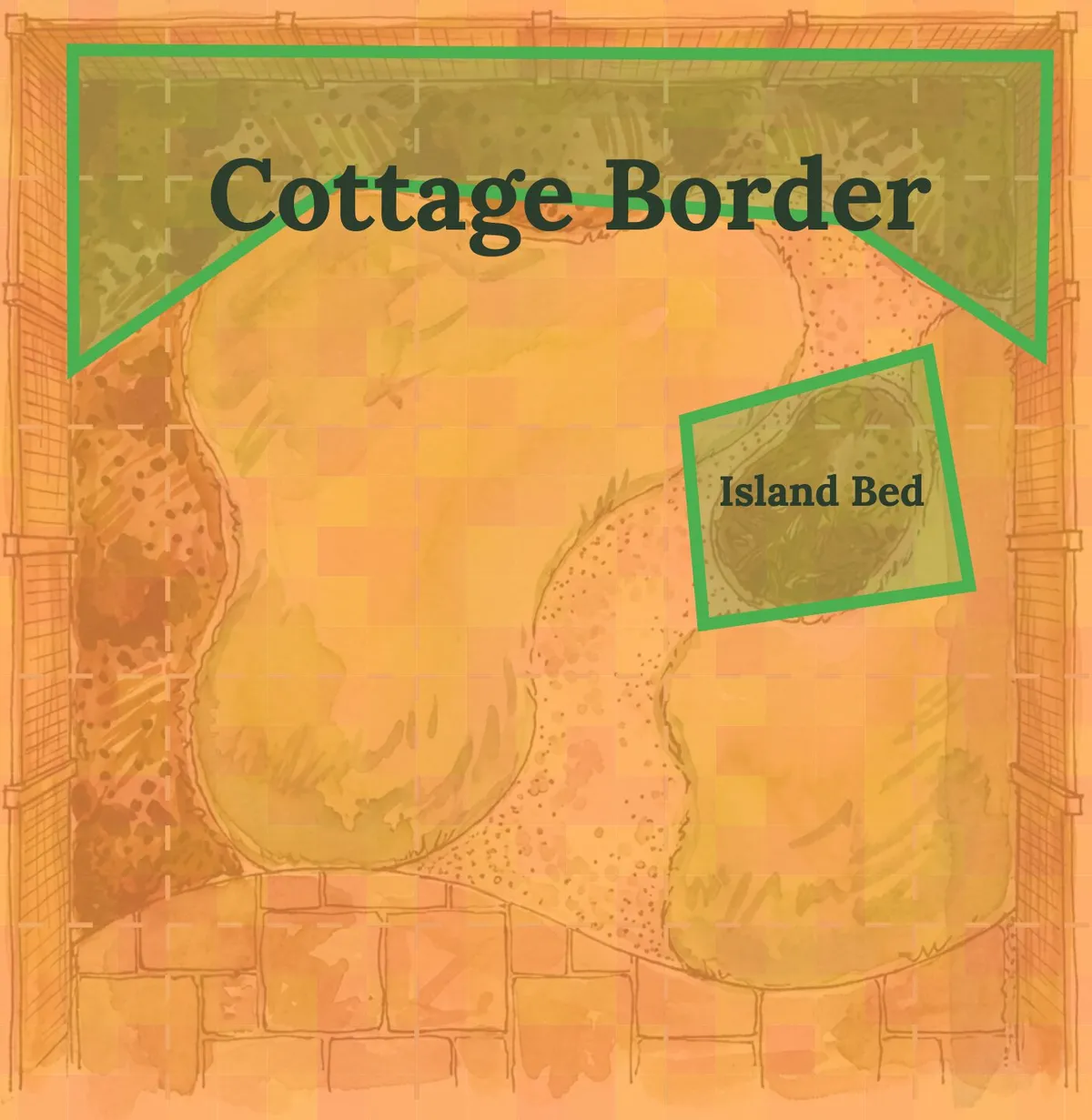
This border started as a blank canvas: 2.9m² of sunny potential with nothing but bare soil. The goal was to create layered planting that would deliver colour from spring through autumn, with evergreen structure to hold things together in winter. What follows is the thinking process behind each planting decision, from the roses that anchor the scheme to the bulbs that wake it up in March.
Building the Backbone with Roses
Every cottage border needs a star, and in a sun-drenched spot, roses are the obvious choice. With over sixty varieties that would work in these conditions, the challenge was narrowing down to roses that would earn their place for months rather than weeks.
The focus was on tall shrub roses at 90cm or above that flower continuously from June through to October. These would provide vertical structure at the back of the border while delivering four to five months of colour - the kind of reliable performance that justifies the prime position.
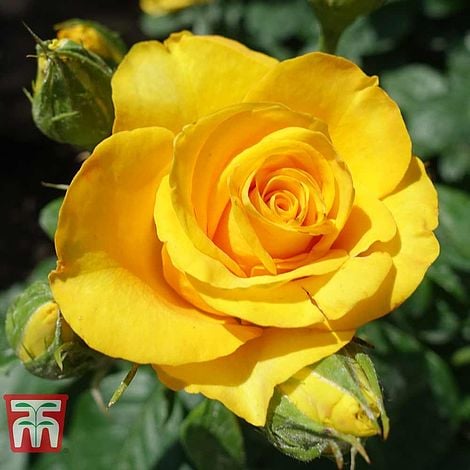
Rosa 'Breeder's Choice Gold' — Jun-Sep
A classic hybrid tea with exquisitely formed golden flowers that make superb cut flowers. Reaches 1m tall with an upright habit perfect for the back of the border.
Rich golden blooms on a 1m plant
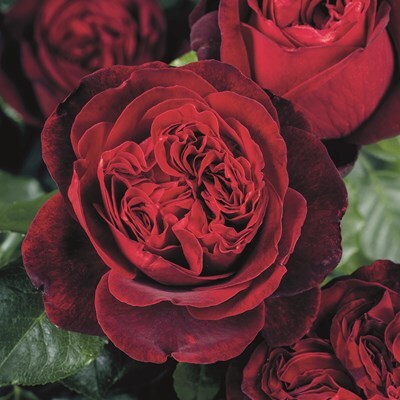
Rosa 'Admiral' — Jun-Oct
The longest flowering season of the shortlist at five months. Compact 0.6m spread makes it easy to repeat along the border for rhythm.
Five months of continuous flowering
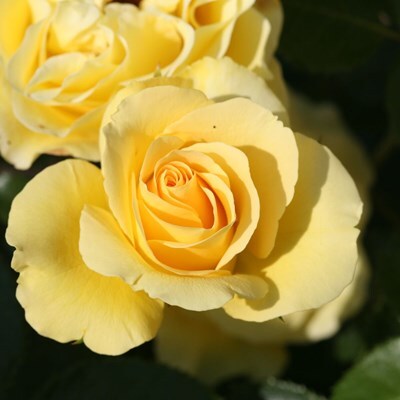
Rosa 'Anniversary Wishes' — Jul-Sep
Scented yellow blooms on a robust, disease-resistant plant. Reaches 0.9m with good repeat flowering throughout summer.
A robust and healthy shrub rose
I went with Rosa ‘Breeder’s Choice Gold’ for its rich golden colour that would set the warm tone for the entire border. At 1m tall with an upright habit, it anchors the back of the planting and provides that classic cottage garden silhouette of blousy roses against a backdrop of foliage.
Adding Purple Drama with Alliums
With golden roses established as the backbone, the border needed a contrasting colour to create visual tension. Purple is the classic complement to yellow, and ornamental alliums offer something roses cannot: dramatic spherical flower heads that float above surrounding plants on slender stems.
The search focused on tall alliums at 80cm or above that would flower in May and June, bridging the gap between spring bulbs and summer roses. Their transparent stems allow them to weave through other plants without blocking the view, adding vertical accents without creating visual clutter.
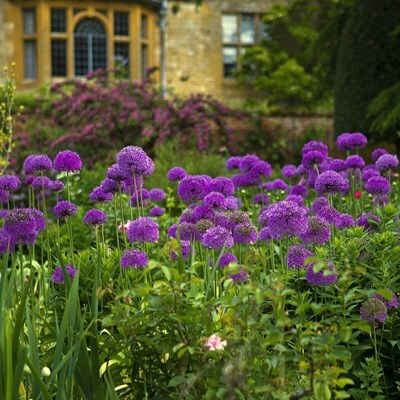
Allium hollandicum 'Purple Sensation' — Jun
Probably the most popular ornamental allium, and for good reason. Deep violet spheres on 80cm stems have a striking silhouette that works beautifully in naturalistic planting.
The quintessential cottage garden allium
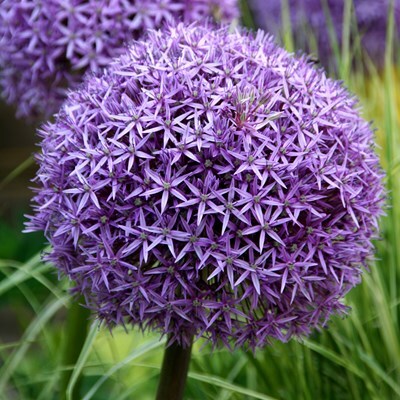
Allium 'Globemaster' — Jul
For maximum drama, these enormous flower heads make a real statement. Good for extending the allium season into July when most have finished.
Giant spheres up to 15cm across
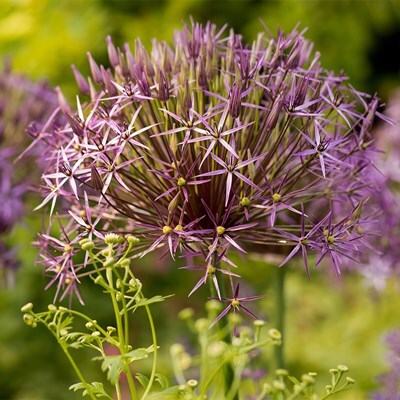
Allium christophii — Jun-Jul
Huge globes up to 20cm across with a distinctive metallic sheen. The dried seed heads remain attractive well into autumn.
Star of Persia with metallic sheen
I chose Allium hollandicum ‘Purple Sensation’ for its reliable performance and classic cottage garden character. At 80cm, it sits just below the roses, creating a middle layer of purple spheres that appear in June just as the roses are getting started. The deep violet flowers create exactly the colour contrast needed against the golden roses, and their transparent stems allow the planting behind to remain visible.
Summer Colour with Phlox
The border needed something to carry colour through the height of summer after the alliums finish and while the roses continue. Phlox paniculata varieties are cottage garden classics that fill this role perfectly, offering fragrant flower clusters from July through September.
The search focused on blue and mauve tones to complement both the purple alliums and the golden roses, creating a cohesive colour palette that shifts from purple-gold in early summer to blue-gold in midsummer.
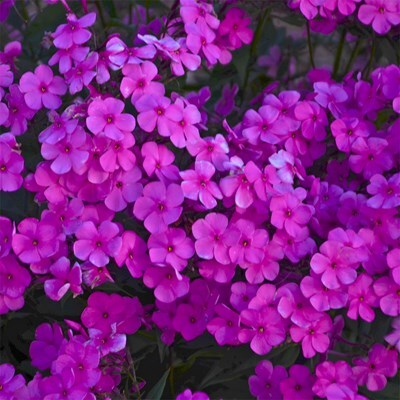
Phlox 'Cloudburst' — Jun-Aug
A billowy, mounding display of rich lavender-purple flowers. The glossy foliage stays healthy and mildew-free throughout the season.
Lavender-purple with bright pink eyes
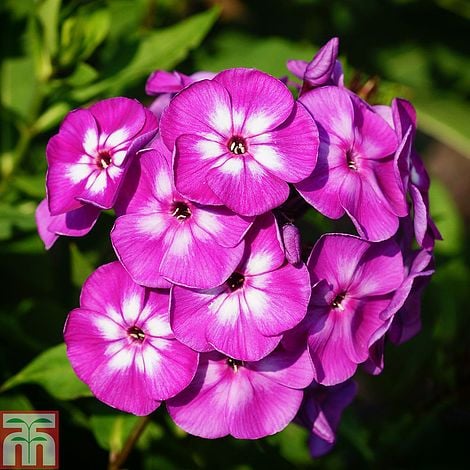
Phlox paniculata 'Purple Eye Flame' — Jul-Sep
Dramatic purple-pink flowers with contrasting dark eyes. Neat, bushy habit at 60cm perfect for the front-middle layer.
RHS Award of Garden Merit winner
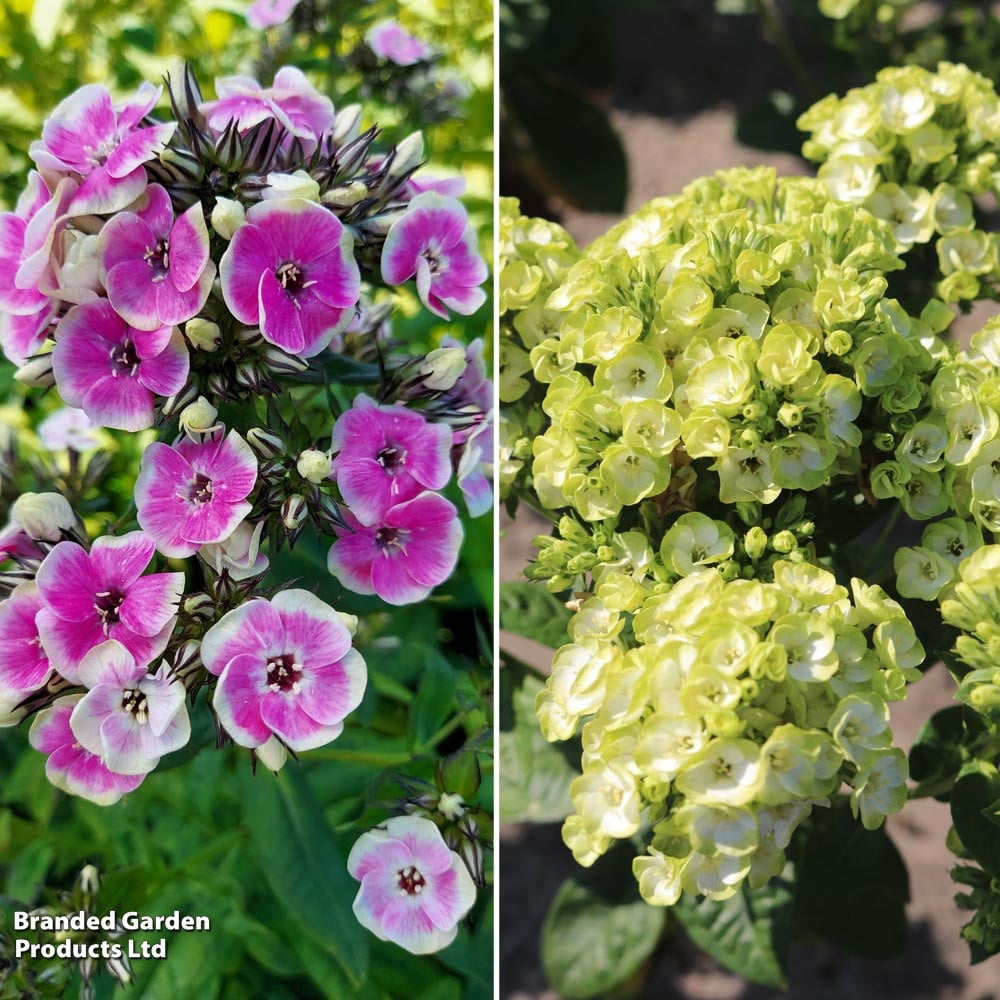
Phlox paniculata 'Orchid Duo' — Jun-Sep
Dense pyramid-shaped panicles in a zingy combination of colours. The longest flowering season at four months.
Unusual lime-green and hot pink combination
I chose Phlox ‘Cloudburst’ for its lavender-purple flowers that provide cool contrast to the warm golden roses. Flowering from June through August at 60cm tall, it fills the middle layer and extends the colour season through late summer. The glossy, mildew-resistant foliage stays attractive all season, and the fragrance adds another sensory dimension to the border. ‘Purple Eye Flame’ would be an excellent alternative if you want the flowering to extend into September.
Spring Colour with Daffodils
The border analysis revealed a significant gap: nothing flowering from December through February, and only sparse coverage in early spring before the roses start in June. Golden daffodils were the obvious solution - they echo the warm colour scheme while providing cheerful spring interest before the main show begins.
The focus was on medium-height daffodils between 40-60cm that would naturalize well and bridge the gap from March to May. Their foliage dies back by June, conveniently disappearing just as the roses and perennials take over.
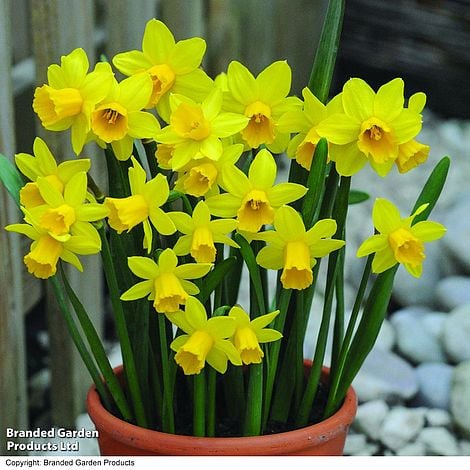
Narcissus 'Tête-à-Tête' — Mar-Apr
Delightful miniature daffodils that naturalise freely. At just 15cm they tuck in at the front edge without overwhelming other plants.
Compact but prolific spring colour
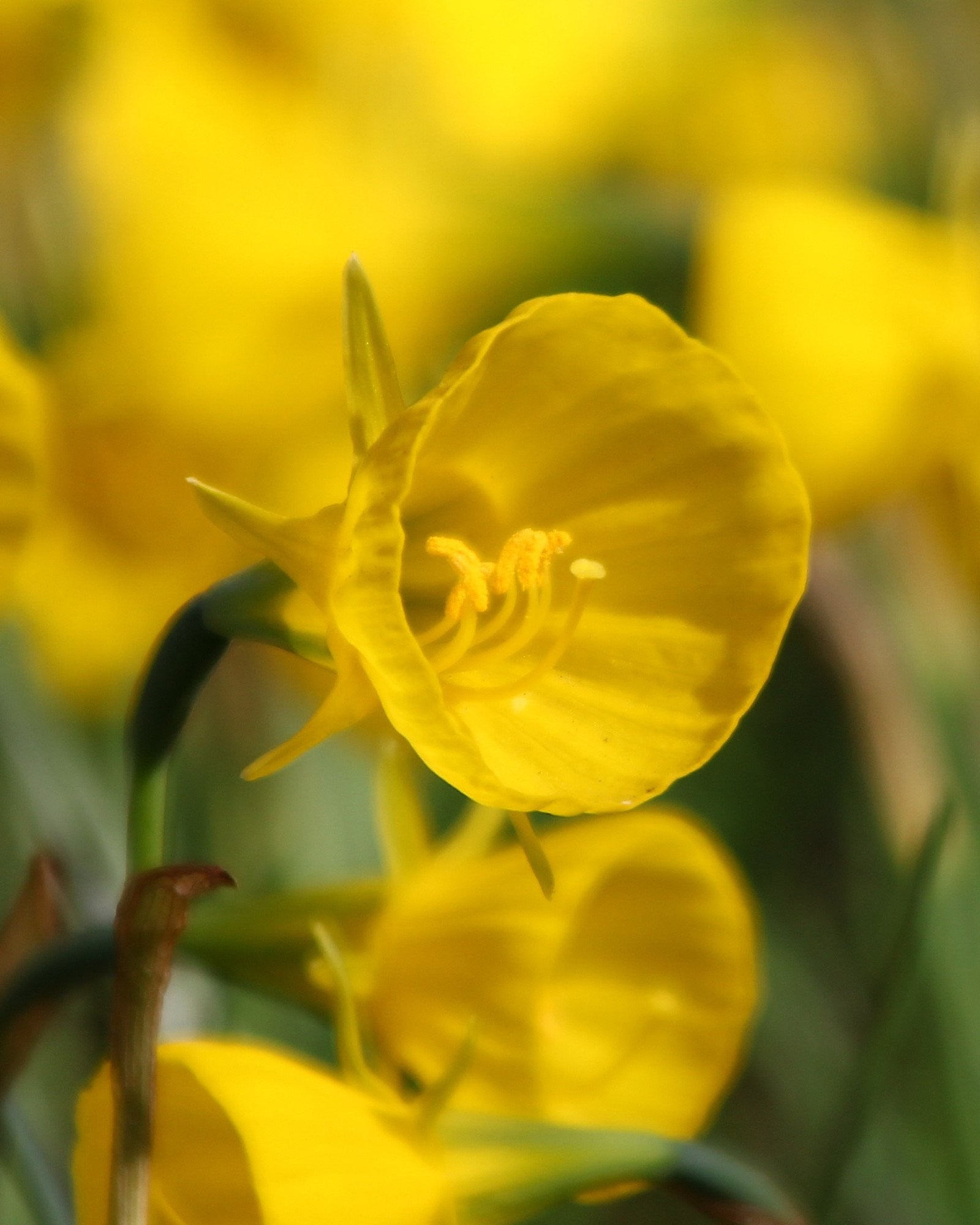
Narcissus 'Golden Bells' — Mar-Apr
Unusual funnel-shaped flowers that look like dancing petticoats. Perfect for naturalising and adding cottage charm.
Charming hoop petticoat daffodils
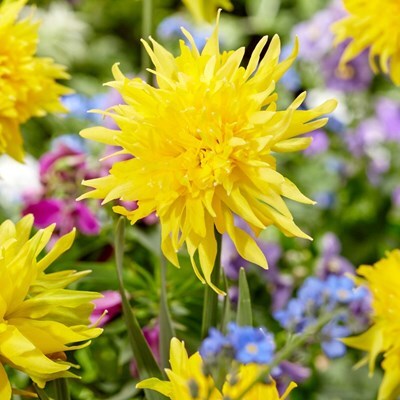
Narcissus 'Rip van Winkle' — Mar-Apr
An older variety from 1929 with clusters of shapely double flowers. Light, floral perfume and excellent for naturalising.
Shapely double blooms with cottage character
I planted generous drifts of Narcissus ‘Golden King Alfred’ and Narcissus ‘Avalanche’ throughout the middle layer. The classic golden trumpets of ‘Golden King Alfred’ establish the warm colour theme that continues through to the summer roses, while ‘Avalanche’ adds white and yellow tazetta-type flowers that brighten the scheme and naturalise readily. Planted in drifts of 7-15 bulbs with 10-15cm spacing, they create rivers of spring colour that fade gracefully as the perennials emerge.
Evergreen Structure for Winter
The final piece was year-round backbone. Without evergreen structure, the border would look completely bare from November to March - three months of nothing but bare soil and dormant stems. Two shrubs were selected to provide winter presence while earning their keep with flowers in other seasons.
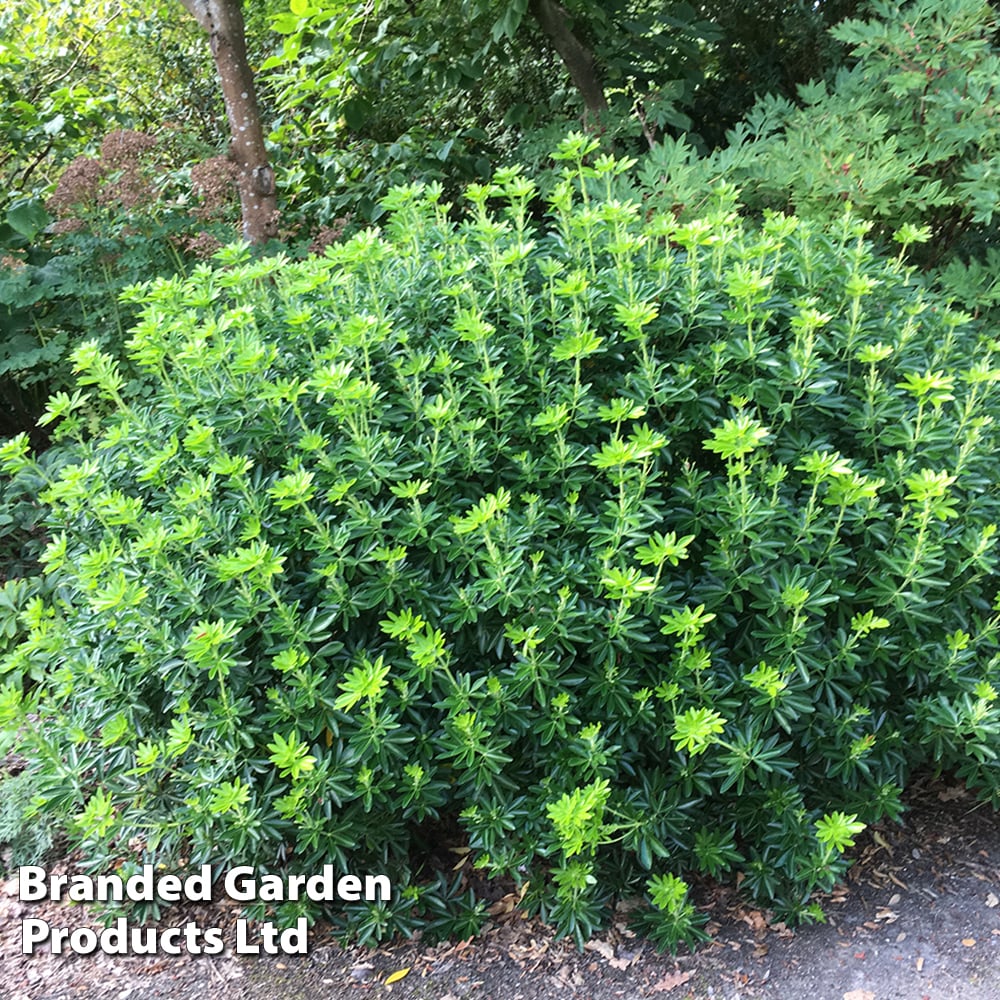
Choisya × dewitteana 'Greenfingers' — May-Jun, Aug-Sep
A cottage garden classic with glossy evergreen foliage and fragrant spring flowers that often repeat in autumn. Upright habit at 1.2m × 0.6m.
Fragrant white flowers with pink blush
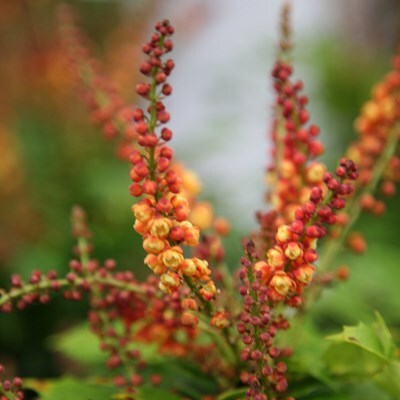
Mahonia nitens 'Cabaret' — Aug-Nov
Fills the critical autumn gap with yellow flowers from August to November. Architectural evergreen foliage provides bold winter structure.
Late-season flowers when most plants finish
Choisya × dewitteana ‘Greenfingers’ was placed at the back corner for its glossy evergreen foliage and fragrant white flowers that appear in May and often again in August. At 1.2m tall with a compact 0.6m spread, it provides substantial structure without overwhelming the border.
Mahonia nitens ‘Cabaret’ was chosen specifically for its late flowering period from August to November - exactly when most cottage garden plants are finishing. Its yellow flowers echo the golden colour theme, and the architectural evergreen foliage provides bold winter interest. These two shrubs together ensure the border has presence in every month of the year.
The Transformation
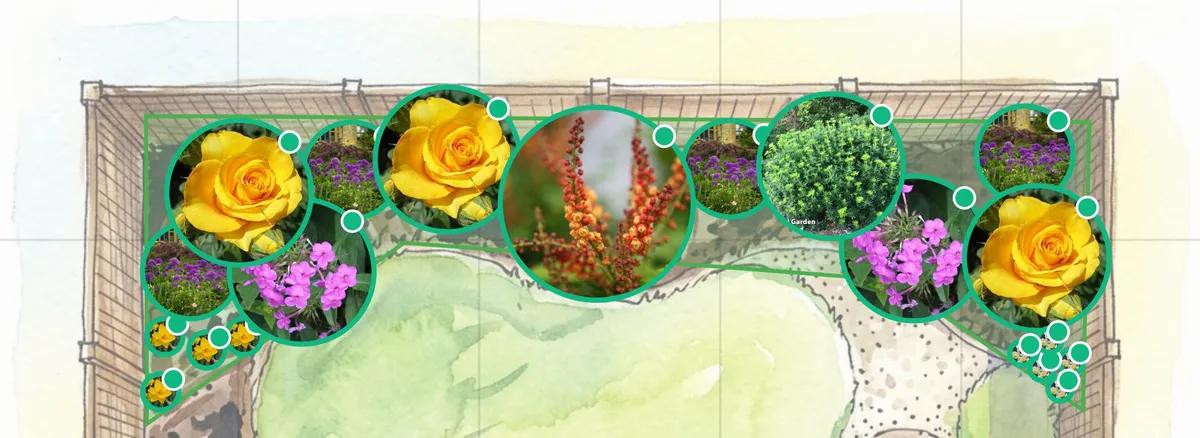
What started as bare soil is now a working cottage garden with something to offer in every season. The flowering calendar shows strong coverage from March through to November, with only December through February lacking flowers (though the evergreen shrubs provide structure and interest even then).
The colour palette holds together through the seasons: golden daffodils in spring give way to purple alliums and golden roses in early summer, then mauve phlox and golden roses through midsummer, and finally yellow Mahonia flowers extending into November. There’s always a warm tone present, always something in bloom.
The layering creates depth and interest: tall roses and shrubs at the back, medium alliums and phlox in the middle, daffodils and lower perennials at the front. The transparent stems of the alliums and the fine texture of the daffodil foliage allow views through to the plants behind, making the border feel larger than its 2.9m² footprint.
Making It Your Own
Your sunny border might be larger or smaller, wider or narrower. The principles remain the same: start with structure (roses and evergreen shrubs), add seasonal layers (spring bulbs, summer perennials), and choose colours that create pleasing contrasts or harmonies.
If golden yellow isn’t your colour, the same approach works with pink roses and blue companions, or white roses with purple accents. The key is building layers that deliver interest through the seasons rather than everything peaking at once and leaving nothing for the rest of the year.
The Right Plant Right Place app can help you discover which plants suit your specific conditions and build a planting plan that works for your space, your style, and your available time.
Ready to plan your garden?
The Right Plant Right Place app can analyse your specific garden conditions and suggest plants that will thrive in your space.
Get Started Free