Year-Round Interest from a North-Facing Shady Border
A step-by-step guide to filling a shady, north-facing border with plants that thrive in low light - from winter-flowering shrubs to silver-leaved perennials that brighten the darkest corners.

Michael Johnson
Founder & Head Gardener
Michael is the founder of Right Plant Right Place and a passionate gardener with several years of experience designing and maintaining gardens.
Expertise
- Garden design
- Plant selection for challenging conditions
- Sustainable gardening practices
- Shade gardening
If you have a north-facing border, you’ve probably noticed that most gardening advice assumes you have sun. Lists of “top ten border plants” are dominated by lavender, roses and salvias - plants that would sulk and rot in the conditions you’re actually working with. The good news is that shade-tolerant plants aren’t consolation prizes. Many of them are among the most elegant and interesting plants you can grow, and a well-planted shady border can look good in every month of the year.
This guide follows the process of planting an 11-square-metre north-facing border from near-scratch - starting with just a hydrangea and a fern, and building it into a border with year-round flowers, textural contrast and silvery foliage that catches whatever light is available.
Starting Point: Two Plants and a Lot of Bare Soil
The border already had two plants doing well: a Hydrangea macrophylla ‘Glowing Embers’ providing bold structure and colour-changing blooms from July to September, and a Dryopteris erythrosora (buckler fern) adding elegant fronds at the front. Both were proof that the space could support good plants - but they only covered about 30% of the area and left ten months of the year with nothing flowering.
The main problems were clear. No evergreen structure meant the border looked bare from November to April. The flowering calendar had a huge gap from January to June, and another from October onwards. There was no height variation - both plants sat in the middle layer with nothing behind them. And texturally, the border only had two notes: the hydrangea’s bold leaves and the fern’s medium fronds.
Evergreen Structure for the Back Layer
The first priority was year-round backbone. Without evergreen plants, a shady border becomes a patch of bare soil for half the year, which is exactly the kind of outcome that makes people give up on gardening.
With nearly a hundred evergreen shrubs to choose from for these conditions, narrowing by texture made the decision easier. The hydrangea already provided bold, coarse foliage, so fine-textured evergreens would create contrast rather than competition.
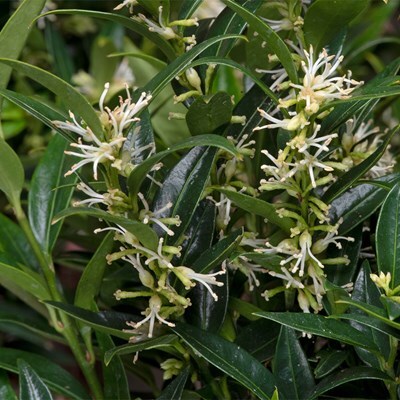
Sarcococca ruscifolia var. chinensis 'Dragon Gate' — Jan-Mar, Dec
Fine-textured evergreen foliage with fragrant cream flowers through winter. At 1m tall, it anchors the back layer and provides scent when little else is happening in the garden.
Dragon Gate fills the winter gap with fragrant cream flowers
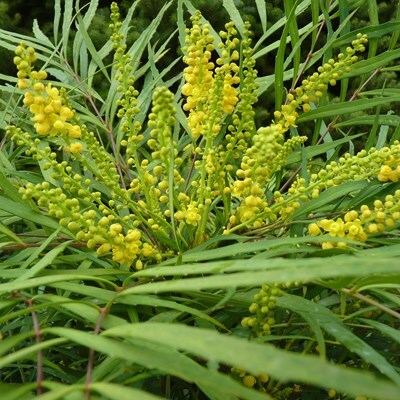
Mahonia eurybracteata subsp. ganpinensis 'Soft Caress' — Aug-Oct
Award-winning structural accent with remarkably fine, bamboo-like foliage. Yellow flowers from August to October extend interest as the hydrangea fades. A much softer plant than the spiky mahonias most people picture.
Soft Caress has bamboo-like foliage unlike typical spiky mahonias
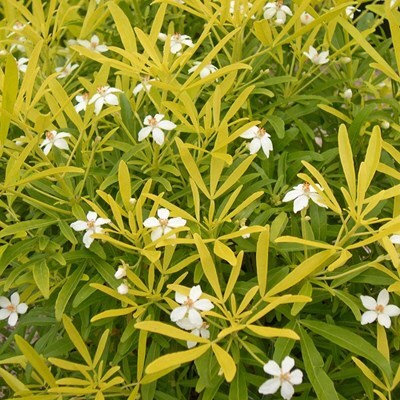
Choisya × dewitteana 'Aztec Gold' — Apr-May, Sep
Golden-yellow-green foliage that brightens shade without needing flowers to do it. White fragrant blooms appear in April–May and repeat in September. At 1.2m, it provides good back-layer height.
Golden foliage brightens shady corners year-round
The choice came down to what each plant could contribute beyond just being green all year. Sarcococca ‘Dragon Gate’ was the clear pick for one position because it flowers from January to March - the exact months that had nothing. Its fragrant cream blooms are small but noticeable, and the fine-textured foliage contrasts well with the hydrangea’s bold leaves.
For a second evergreen, Rhododendron japonica ‘White’ fills the spring gap with white flowers in April and May, creating a clean, cool woodland feel. And Hebe topiaria rounds out the evergreen structure with variegated fine foliage and white summer flowers from June to August, bridging the gap before the hydrangea’s peak.
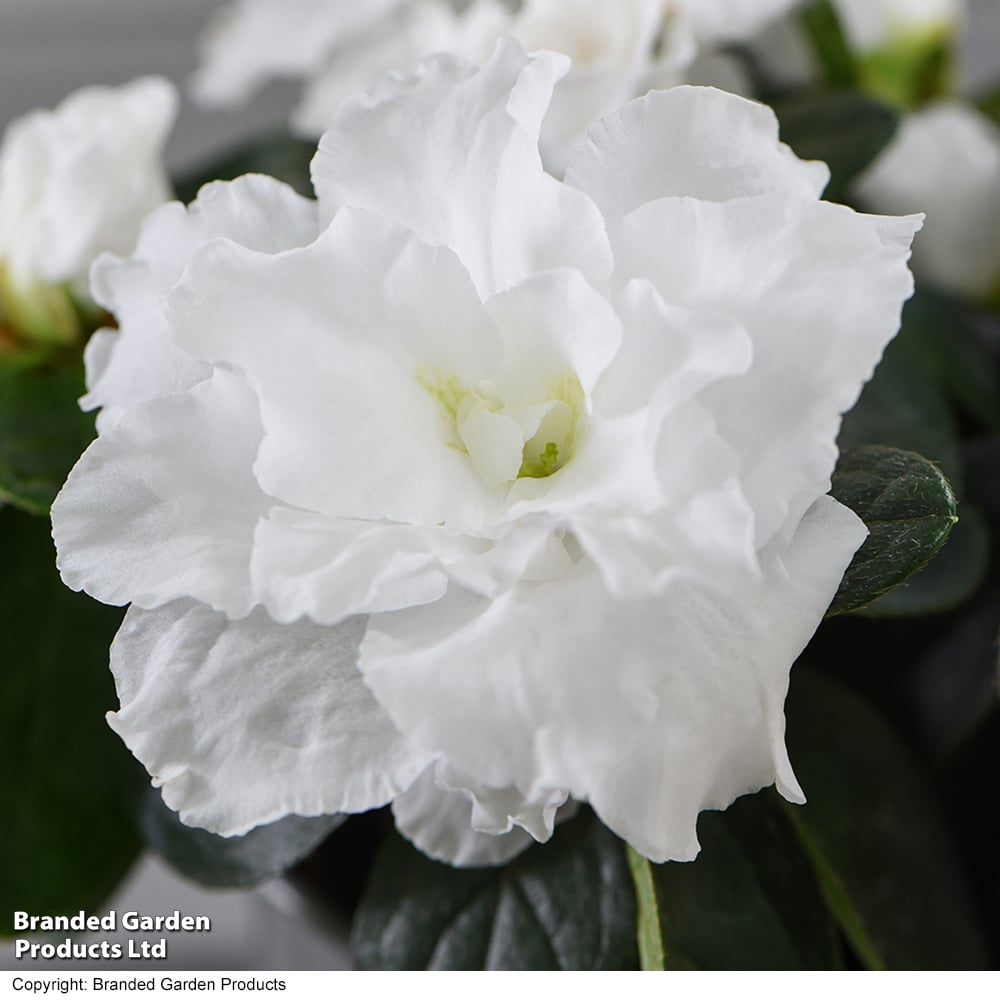
Rhododendron japonica 'White' — Apr-May
White flowers in April and May fill the spring gap. At 1m tall, it provides structure at the back while the white blooms contrast with any colourful spring bulbs you might add later.
White azalea blooms create a cool woodland atmosphere in spring
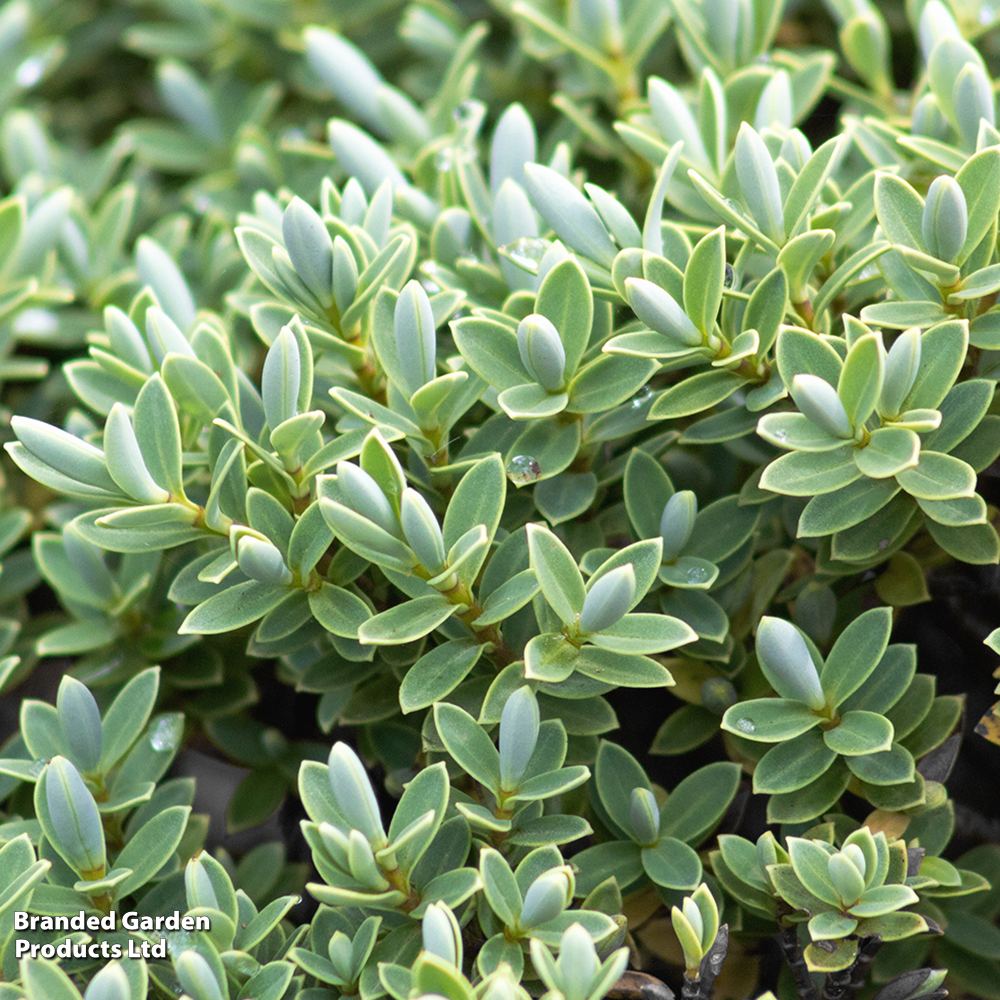
Hebe topiaria — Jun-Aug
A mounding evergreen with variegated fine foliage that catches light in dark corners. White flowers from June to August bridge the gap between the spring azalea and the hydrangea’s July start.
Variegated foliage illuminates shaded spots year-round
Late-Season Anemones to Carry the Show
With the evergreen structure in place and spring covered, the next problem was autumn. The hydrangea finishes in September, and without something to take over, the border would go quiet just as the garden enters its final act.
Japanese anemones are a natural fit for shady borders. Their upright stems hold flowers well above the foliage, creating a transparent, airy effect that weaves through other plants rather than sitting solidly in front of them. They evolved in woodland conditions and genuinely prefer the shade.
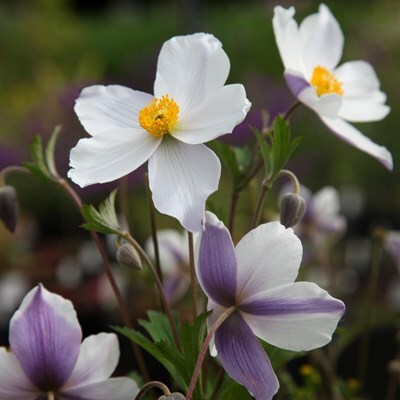
Anemone 'Wild Swan' PBR — May-Nov
White flowers with grey-blue reverses from May right through to November. At 0.45m it sits at the front, and planting a drift of six creates rhythm and repetition through the border.
Wild Swan flowers for seven months - the border's hardest-working plant
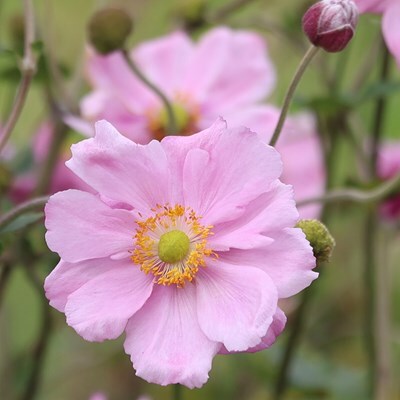
Anemone hupehensis 'Queen Charlotte' — Jul-Oct
A taller option at 0.9m with pink flowers from July to October. The pink echoes the hydrangea’s summer tones while the upright habit adds vertical interest to the middle layer.
Queen Charlotte's pink blooms echo the hydrangea
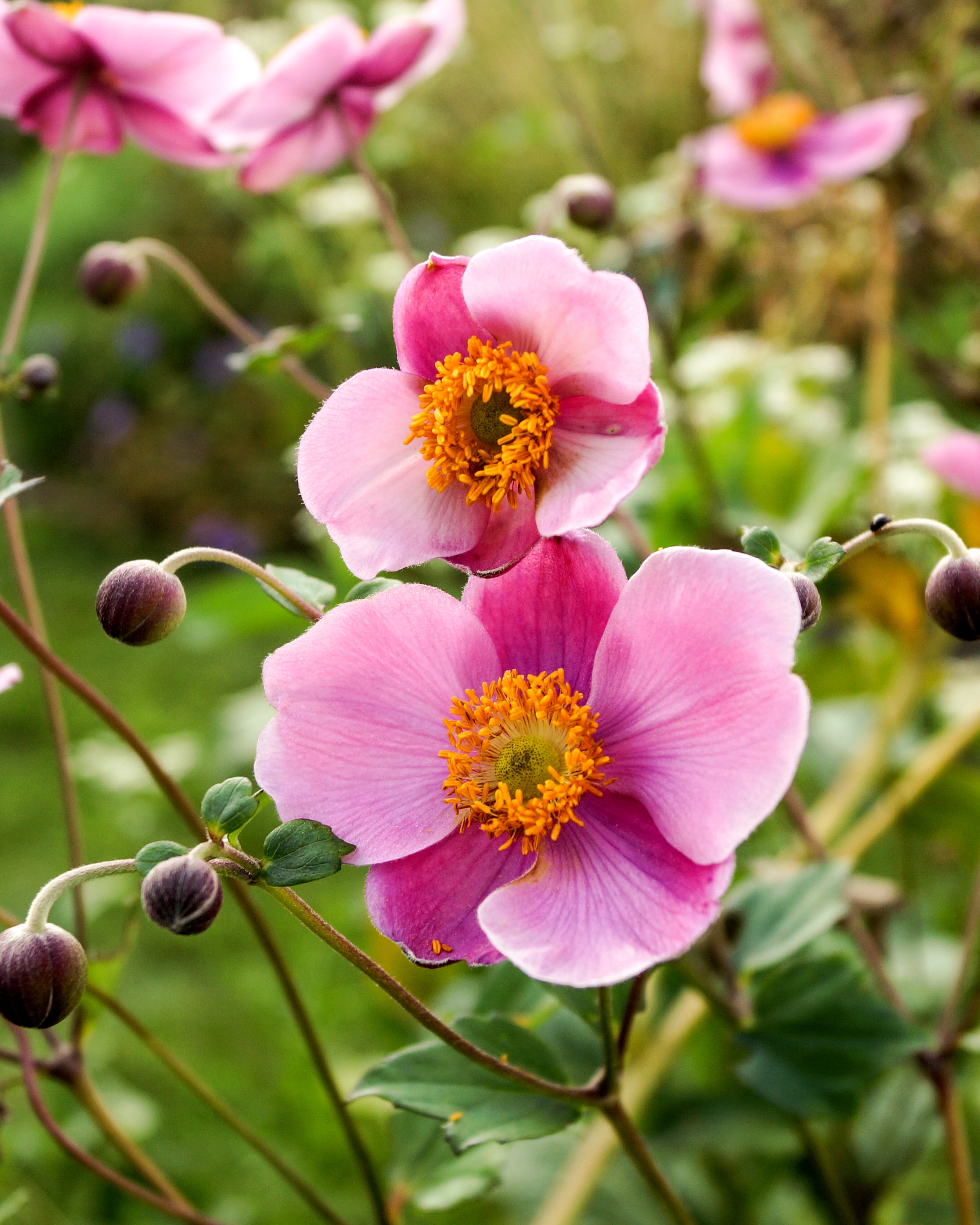
Anemone 'September Charm' — Jun-Sep
Pink and white flowers at 0.6m, with semi-evergreen foliage that provides some winter structure. A good transition height between the front-layer anemones and the taller shrubs behind.
A reliable mid-height option with semi-evergreen foliage
Anemone ‘Wild Swan’ PBR earned its place by flowering for seven months - from May to November - which is extraordinary for any plant, let alone one that thrives in shade. Planting a drift of six along the front of the border creates a continuous thread of white flowers that ties the whole scheme together. Its compact 0.45m height keeps it at the front where it doesn’t block anything behind.
Silver Foliage to Brighten the Shade
With the flowering calendar complete, the border still looked uniformly green. In a sunny border that might be fine, but in shade, green foliage tends to merge into a dark mass where individual plants lose their identity. Silver and pale foliage solves this by reflecting whatever light reaches the border, making individual plants stand out and brightening the overall effect.
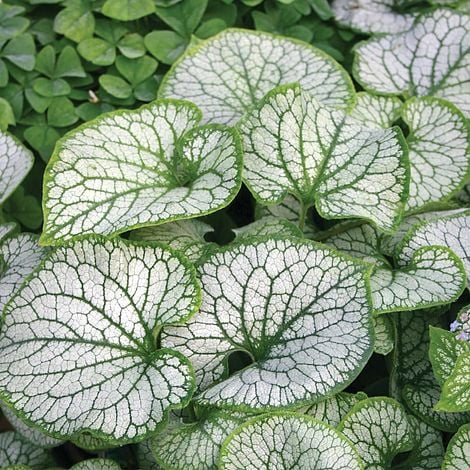
Brunnera macrophylla 'Jack Frost' — Apr-May
Silver-frosted heart-shaped leaves with sky-blue forget-me-not flowers in April and May. The bold leaf texture echoes the hydrangea’s coarseness in a completely different colour, creating a visual link across the border.
Jack Frost's silver-frosted leaves light up shaded ground
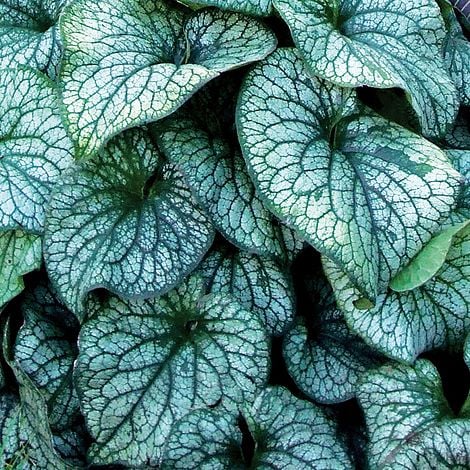
Brunnera macrophylla 'Alexander's Great' — Mar-May
Larger silver leaves than ‘Jack Frost’ with a 0.9m spread. Sky-blue flowers appear as early as March, extending the spring interest. The bold foliage provides maximum contrast against the green of the surrounding plants.
Even larger silver leaves for maximum shade-brightening impact
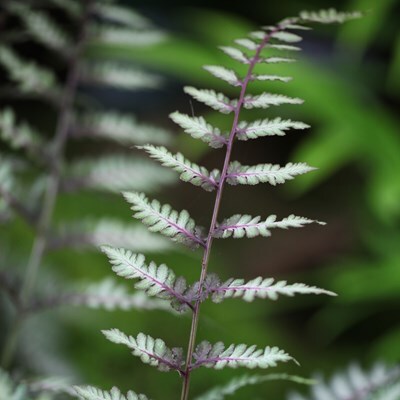
Athyrium niponicum var. pictum 'Ursula's Red' — Foliage plant
Silver fronds flushed with purple-red create a striking contrast to the existing buckler fern. The spreading habit fills space efficiently and the metallic sheen catches light in the shadiest corners.
Silver fronds flushed with purple-red add drama at the front
Brunnera ‘Jack Frost’ was chosen for its reliable silver foliage and those forget-me-not flowers that appear when the border is transitioning from winter to spring interest. Paired with Athyrium ‘Ursula’s Red’, the combination gives the border two different types of silver - bold heart-shaped leaves at mid-height and fine, feathery fronds tinged with red at the front. The two textures work quite differently in the space, with the Brunnera catching the eye from a distance and the painted fern rewarding a closer look.
Adding Movement with Ornamental Grass
The last gap was more about form than flowers. Every plant in the border was either mounding or arching - there was nothing upright and airy to add a different kind of movement. In a shady border, the stillness can feel heavy, and a grass that catches the breeze breaks that up.
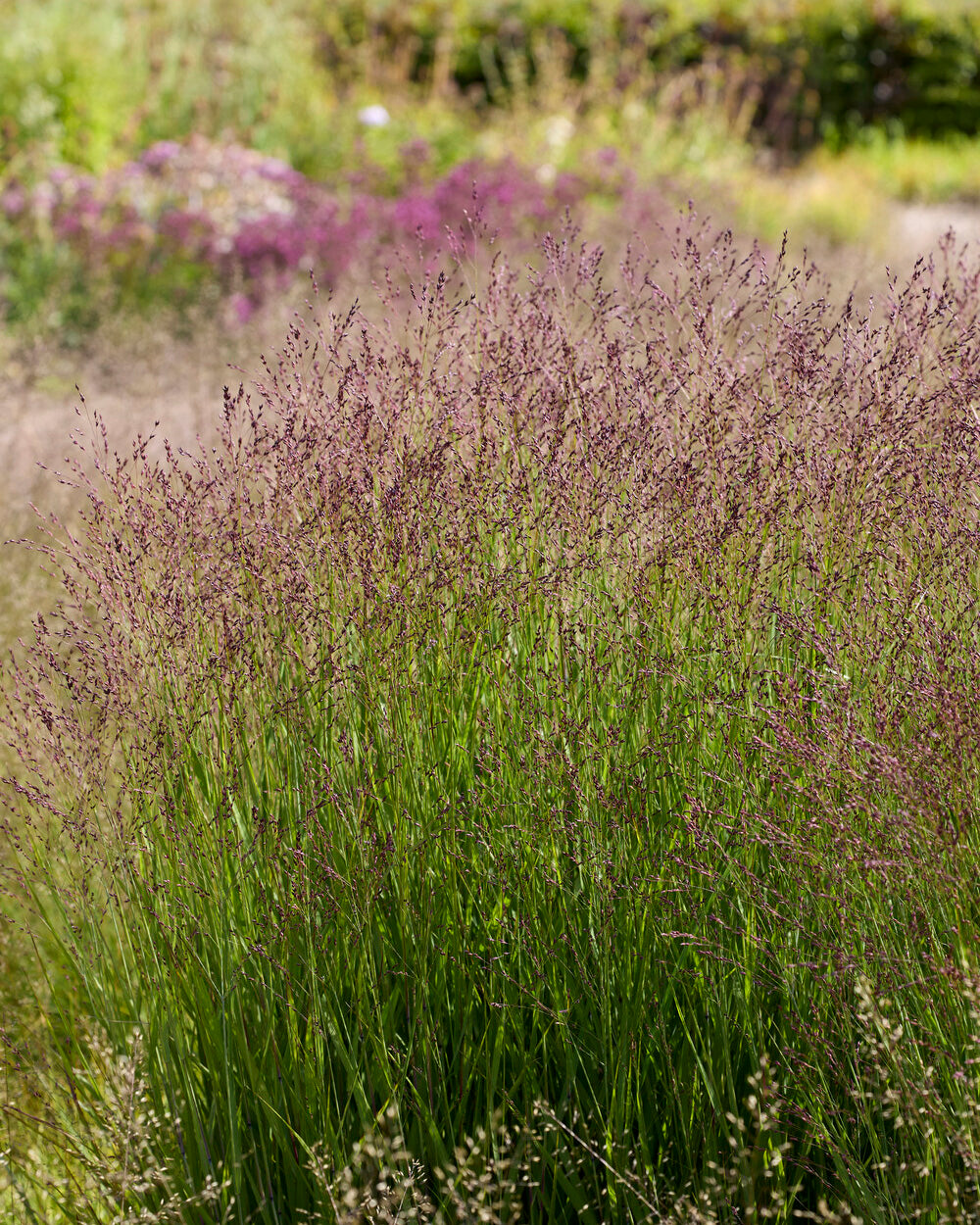
Panicum 'Purple Tears' — Aug-Sep
At 1.35m this is the tallest plant in the border, providing a vertical accent that contrasts with everything around it. Silvery foliage flushed purple, with red-purple flower heads in August and September adding late-season interest.
Silvery foliage with purple flower heads that catch the breeze
Panicum ‘Purple Tears’ brings something none of the other plants can offer: fine texture, vertical lines and movement. Its silvery foliage continues the brightness theme, while the purple flush ties it to the cooler tones in the painted fern and hydrangea. At 1.35m it’s the tallest thing in the border, which gives the whole scheme a sense of height without the bulk of another shrub.
The Result: Twelve Months of Interest
The finished border covers every month of the year:
- January to March - Sarcococca ‘Dragon Gate’ provides fragrant cream flowers through the coldest months
- April to May - Rhododendron japonica ‘White’ and Brunnera ‘Jack Frost’ take over with white azalea blooms and sky-blue forget-me-nots
- May to August - Anemone ‘Wild Swan’ begins its seven-month run, overlapping with Hebe topiaria’s white summer flowers
- July to September - The hydrangea hits its peak, joined by the anemones and the Panicum’s purple flower heads
- October to November - The anemones carry the border through autumn as everything else winds down
- December - Sarcococca begins flowering again, closing the loop
The evergreen structure from the sarcococca, hebe and rhododendron means the border never looks bare, even in the quietest months. The silver foliage from the Brunnera and painted fern brightens the shade year-round, and the panicum adds movement whenever there’s a breeze.
None of these plants need sun to do well. They were chosen specifically because they evolved in or adapted to shaded, woodland conditions - this is where they want to be. If your border faces north and you’ve been struggling with sun-loving plants that keep failing, that’s not your garden’s fault. It’s a plant selection problem, and it has a straightforward solution.
Ready to plan your garden?
The Right Plant Right Place app can analyse your specific garden conditions and suggest plants that will thrive in your space.
Get Started Free