New Build Garden: From Blank Canvas to Beautiful
How to transform a bare new-build garden into a private, low-maintenance family space - starting with the back fence border

Michael Johnson
Founder & Head Gardener
Michael is the founder of Right Plant Right Place and a passionate gardener with several years of experience designing and maintaining gardens.
Expertise
- Garden design
- Plant selection for challenging conditions
- Sustainable gardening practices
- Shade gardening
Moving into a new-build is exciting, but the garden is often the last thing on the developer’s list. You step outside and find a rectangle of patchy turf, bare fencing, and compacted soil - with the neighbours looking straight down from upstairs. If you’re staring at a blank canvas wondering where to start, the border along your back fence is the single most impactful place to begin. Get that right and you solve privacy, year-round structure, and the feeling that your garden is actually a garden rather than a building site afterthought.
The Starting Point
This garden is a typical semi-detached new-build in Coventry - eight metres wide by ten metres deep. The house sits to the south with patio doors opening onto builder’s grey slabs. New 1.8 metre close-board fencing encloses the north, east, and west sides, and between the patio and the back fence is a rectangle of builder’s turf that’s already looking thin in places.
The border we’re planting runs the full width of the garden along the north fence: eight metres long by one and a half metres deep, giving 12 square metres of planting space. The sun exposure is mixed, with roughly 60% partial sun and 25% full sun, making it a versatile spot that suits a wide range of plants. The soil is standard but compacted from the building work, so anything we plant needs to cope with less-than-ideal ground while it establishes.
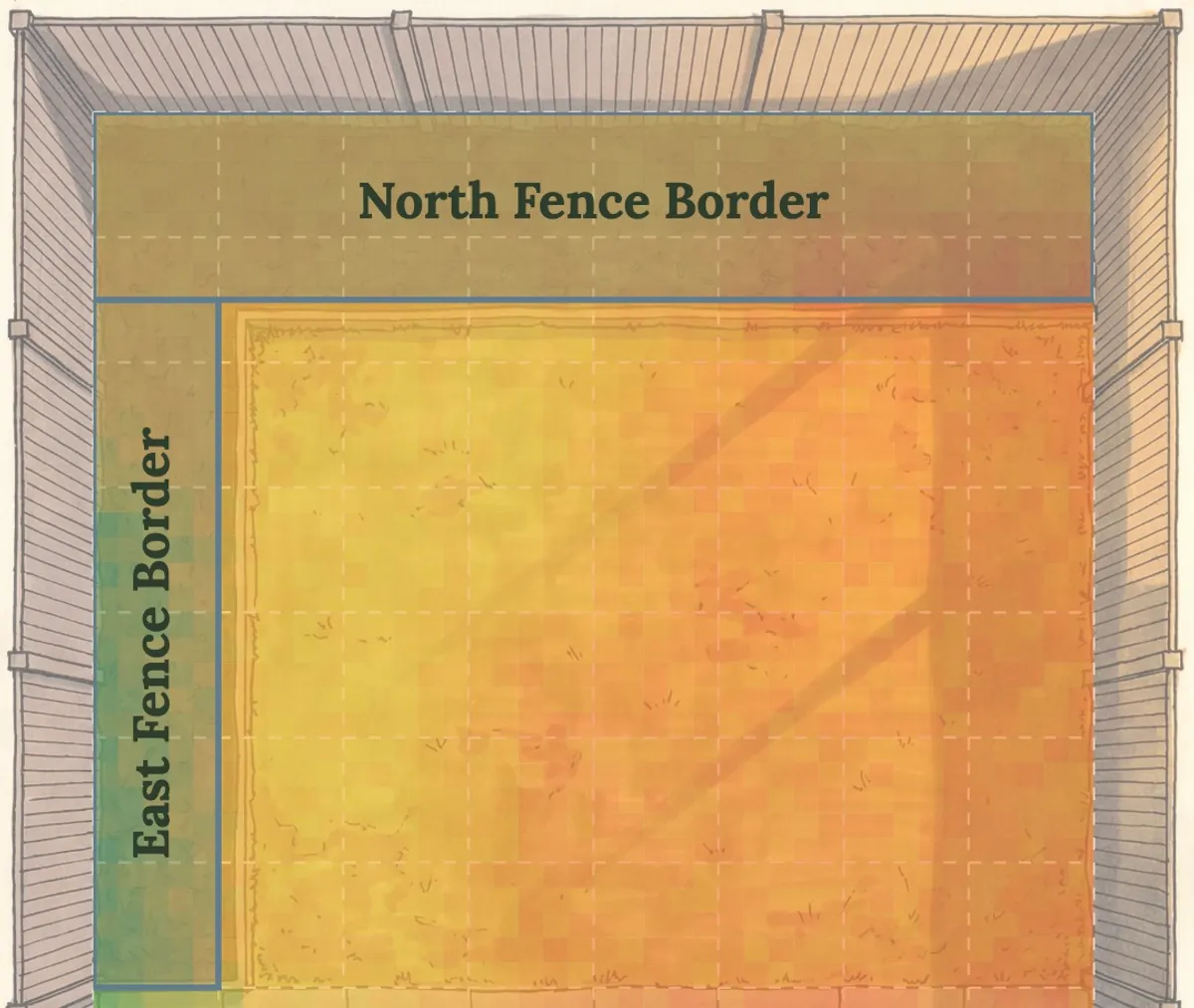
The brief was clear: privacy from neighbours, year-round interest, and genuinely low maintenance. Modern style, not cottage. Plants that forgive neglect rather than punish it. With those priorities in mind, the design breaks down into three layers - tall evergreen screening at the back, structural grasses and shrubs in the middle, and bold foliage at the front.
The Privacy Screen: Tall Evergreens Along the Fence
The first priority was blocking the sight line from the neighbours’ upstairs windows. For that, you need evergreen plants that stay clothed year-round - deciduous trees look good in summer but leave you exposed for five months of the year.
There are plenty of columnar evergreens that would work in a modern border. The tallest option is Juniperus scopulorum ‘Skyrocket’ at six metres, which is dramatic but potentially too tall for a 1.5 metre deep border. Juniperus scopulorum ‘Blue Arrow’ is a shorter alternative at two and a half metres with steel-blue foliage, while Taxus baccata ‘Litfass’ offers the rich dark green of yew in a four metre column that will outlast everything else in the garden.
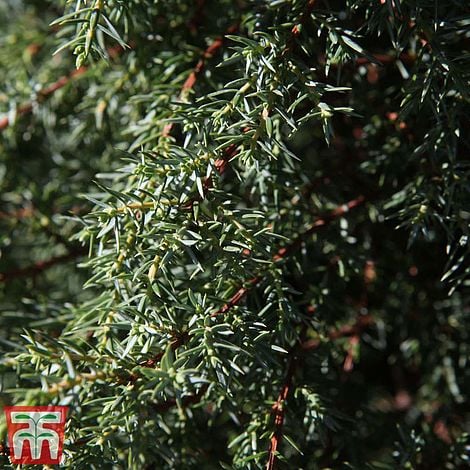
Juniperus communis 'Hibernica'
Reaches four metres tall with just half a metre spread. Fine evergreen foliage, columnar habit, and completely drought tolerant once established.
Irish Juniper forms a dense columnar screen at four metres
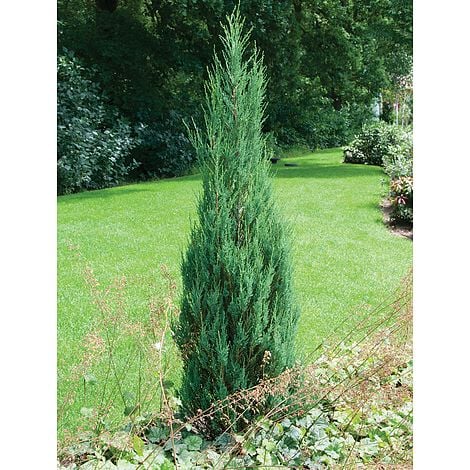
Juniperus scopulorum 'Skyrocket'
The ultimate columnar juniper - six metres tall but only 60 centimetres wide. Steel blue-green foliage. Impressive but may be too tall for a shallow border.
Skyrocket is the tallest option at six metres

Juniperus scopulorum 'Blue Arrow'
Arrow-straight steel blue foliage at two and a half metres. A smaller, more border-friendly version of ‘Skyrocket’ that still provides solid screening.
Blue Arrow is a more compact alternative at two and a half metres
I went with Juniperus communis ‘Hibernica’ - Irish Juniper. At four metres tall with just half a metre of spread, it’s the right balance between privacy and proportion for this border. The narrow columnar habit means you can fit a full row along the eight metre fence without eating into the planting space for the middle and front layers. It’s fully evergreen, drought tolerant once established, and needs no pruning. Sixteen of them spaced along the back row create a dense, year-round screen with no gaps at mature size.
The Middle Row: Grasses for Movement and Texture
With the privacy screen sorted, the middle row needed to contrast with all those vertical columns. Grasses were the obvious choice - their arching forms and fine textures provide the counterpoint that stops a row of columnar evergreens from looking regimented.
The five strongest candidates were all arching feather grasses suited to the modern style. Miscanthus sinensis ‘Kleine Silberspinne’ offers reddish-silver plumes in autumn, while Miscanthus sinensis ‘Zebrinus’ (Zebra Grass) brings variegated foliage with horizontal gold bands for real visual drama. Calamagrostis brachytricha (Korean Feather Reed Grass) sits at a useful 1.5 metres with silvery-pink plumes and a reliable, unfussy nature.
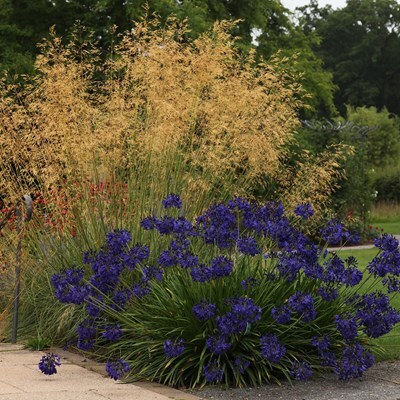
Stipa gigantea — Jun-Jul
The showstopper at two and a half metres. Enormous golden oat plumes float on wiry, see-through stems. Semi-evergreen, so it earns its space year-round.
Golden Oats sends up enormous plumes on wiry stems
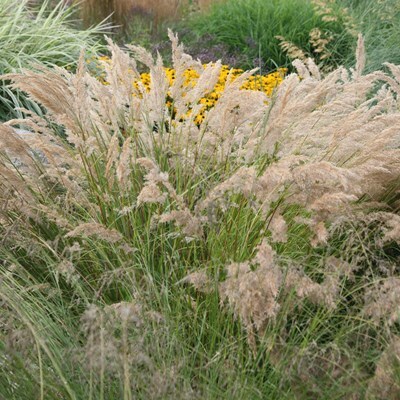
Stipa calamagrostis — Jun-Sep
Softer arching mounds at a metre tall with silvery-purple plumes from June right through September - the longest season of any grass considered.
Pheasant Grass has the longest flowering season of the group

Calamagrostis brachytricha — Jun-Aug
Grey-green foliage with silvery-pink plumes at one and a half metres. A reliable mid-height bridge between the junipers and the front row.
Korean Feather Reed Grass is one of the most reliable arching grasses
I placed Stipa gigantea (Golden Oats) and Stipa calamagrostis (Pheasant Grass) together. The golden oats bridges the height gap between the four metre junipers and the rest of the planting, with its plumes floating at two and a half metres on transparent wiry stems that don’t block the view through the border. The pheasant grass provides four months of silvery-purple plumes - the longest season of any grass in the shortlist - and its arching form is the strongest contrast to the upright junipers. Together they cover June through September with movement and texture.
Filling the Winter and Autumn Gaps
With the grasses handling summer interest, the flowering calendar still had two significant holes: nothing from January to May, and nothing from October to December. The whole point of a modern, year-round border is that it doesn’t go bare for half the year, so plugging these gaps was the next priority.
For winter, there are few better choices in a low-maintenance border than hellebores. For autumn, the newer Mahonia cultivars have transformed what used to be a rather stiff, old-fashioned shrub into something genuinely suited to modern planting.
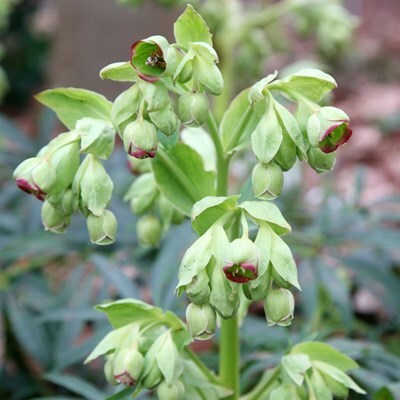
Helleborus foetidus — Jan-Apr
Dark, architectural evergreen foliage year-round with nodding pale green and purple flowers from January through April. Low maintenance and self-seeding.
Stinking Hellebore flowers through the coldest months
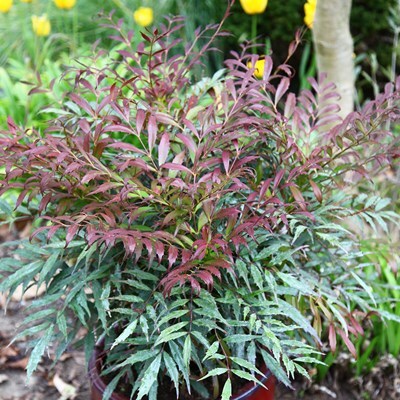
Mahonia eurybracteata subsp. ganpinensis 'Meteor' PBR — Aug-Nov
Bronze-green architectural foliage with bright yellow flowers from August to November. Reaches 1.25 metres in a bold, sculptural form.
Mahonia Meteor's bright yellow flowers cover the autumn months
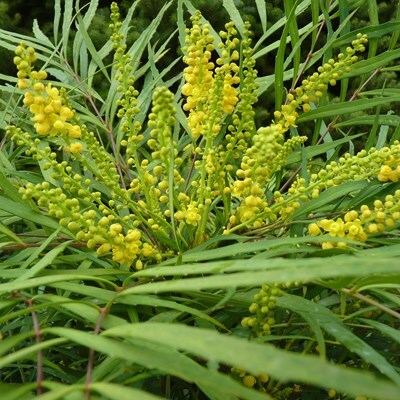
Mahonia eurybracteata subsp. ganpinensis 'Soft Caress' PBR — Aug-Oct
Remarkably fine, bamboo-like foliage with yellow flowers from August to October. RHS Plant of the Year 2013. A softer alternative if ‘Meteor’ feels too bold.
Soft Caress has bamboo-like foliage unlike any typical Mahonia
Helleborus foetidus (Stinking Hellebore) was the clear choice for winter. The name is unfortunate - you’d have to crush the leaves and press your nose to them to notice anything - but the plant itself is outstanding. It’s the only low-maintenance evergreen structural plant that flowers from January through April, filling the biggest seasonal gap in the border completely. The coarse, dark foliage provides year-round texture contrast against the fine-textured junipers and grasses, and it needs no deadheading, staking, or dividing.
Mahonia ‘Meteor’ covers the autumn gap with bright yellow flowers from August to November. Its bold, bronze-green foliage has a sculptural quality that sits well in a modern border, and at 1.25 metres it holds its own in the middle row. If you prefer something softer, Mahonia ‘Soft Caress’ has fine bamboo-like foliage that’s completely unlike a traditional Mahonia and is worth considering as an alternative.
The Front Row: Bold Foliage for Year-Round Presence
For the front of a modern border, foliage colour does more work than flowers. Flowers come and go, but a strong foliage plant holds the border’s character from January to December. The search focused on purple and silver edging plants - a cool palette that complements the steel-blue junipers at the back.
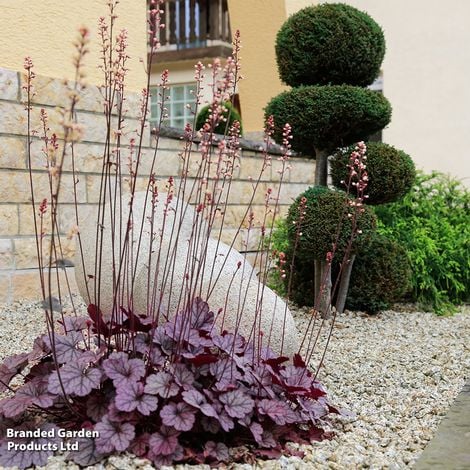
Heuchera 'Forever Purple' — Jun-Aug
Deep, glossy purple mounds at 30 centimetres. One of the most reliable Heucheras for year-round purple tone. Mauve-pink flowers in summer.
Forever Purple delivers consistent deep purple foliage year-round
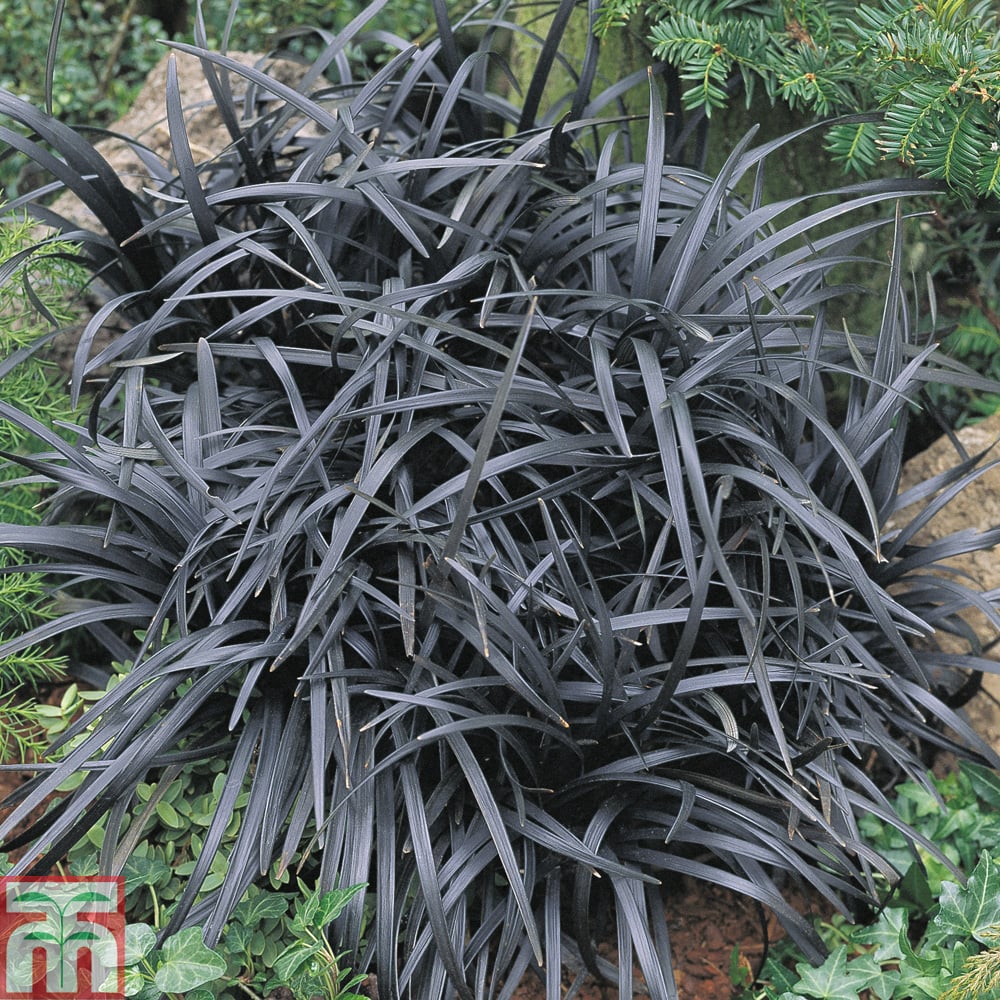
Ophiopogon planiscapus 'Nigrescens'
Near-black grass-like evergreen foliage at 20 centimetres. Creates striking contrast against silver plants. Mauve flowers in summer.
Black Lilyturf brings near-black foliage for a contemporary look
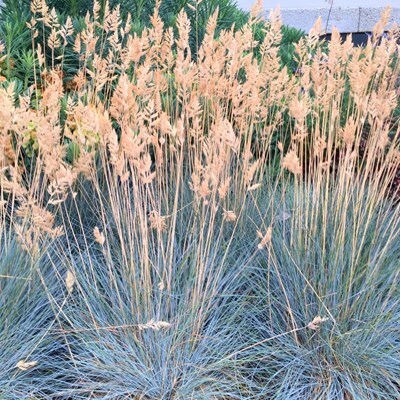
Festuca glauca 'Elijah Blue' — Jun-Jul
The most intensely silver-blue fescue available at 30 centimetres. Tight evergreen mounds that echo the back-row juniper foliage colour.
Elijah Blue echoes the juniper foliage colour at the front of the border
I went with Heuchera ‘Forever Purple’ for its reliable, deep purple foliage that doesn’t fade through the year the way some coral bells do. At 30 centimetres it sits neatly at the border edge, and the mauve-pink summer flowers are a bonus rather than the main event. Black Lilyturf and Blue Fescue ‘Elijah Blue’ are both excellent alternatives - planted in alternating groups of three to five along the front, they’d create a cool, rhythmic edging that ties the whole border together.
The Warm Accent: Bronze Sedge
The one risk with a cool blue-silver-purple palette is that it can feel cold. A single warm accent plant breaks that up without disrupting the overall tone.

Carex testacea — Jul-Aug
Evergreen copper-bronze foliage at a metre tall with fine arching texture. Warm colour glows against blue and silver neighbours.
Bronze Sedge adds warm copper tones to contrast the cool palette
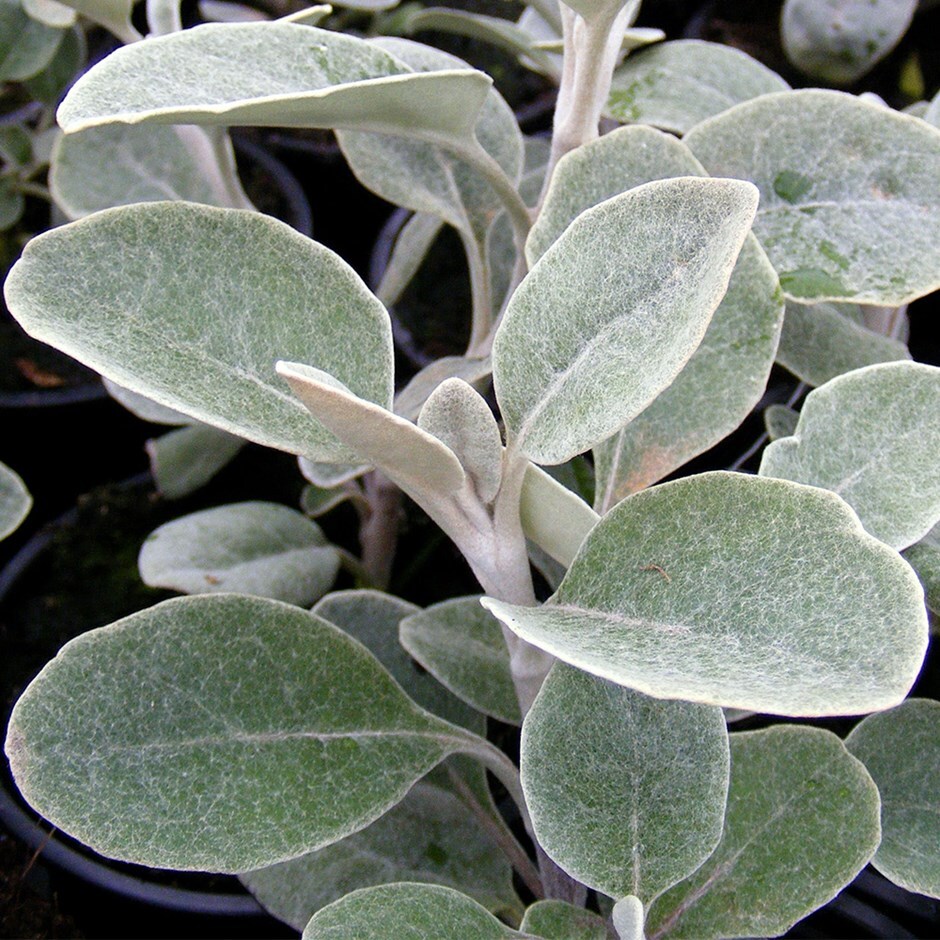
Brachyglottis 'Walberton's Silver Dormouse' PBR — Jun-Jul
Velvety silver foliage on a 90 centimetre evergreen mound. Yellow daisy flowers in summer. An alternative that strengthens the silver thread instead.
Silver Dormouse ties the silver tones from front to back
Carex testacea (Bronze Sedge) does this job well. Its copper-bronze foliage is evergreen and glows when the light catches it, especially against the blues and silvers of the junipers, fescues, and grasses surrounding it. At a metre tall with fine arching texture, it reads as part of the grass family without repeating what the Stipas are already doing. If you’d rather reinforce the silver theme instead of adding warmth, Brachyglottis ‘Silver Dormouse’ is a mounding evergreen shrub with intensely silver foliage that would tie the front and back rows together.
The Finished Border
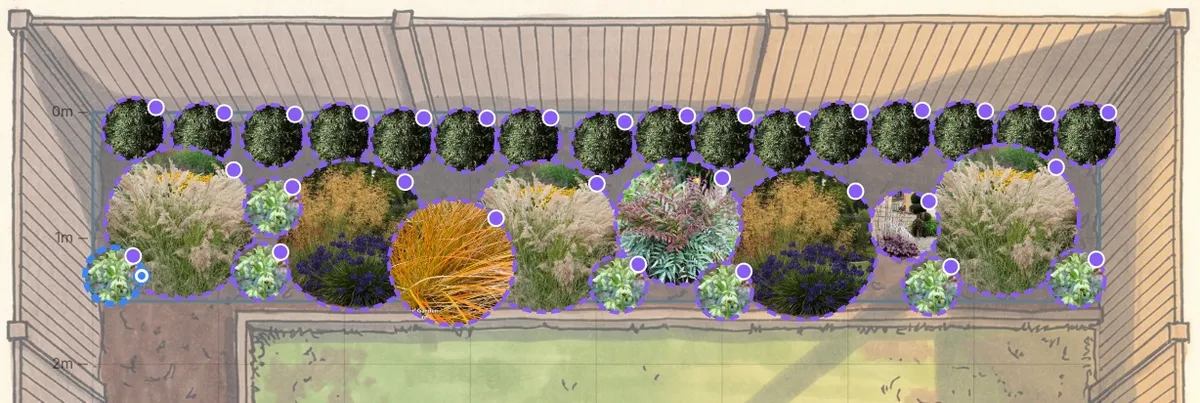
With seven plants across three layers, the border now covers ten out of twelve months of the year. The hellebores flower from January through April, the grasses and Heuchera take over from June to September, and the Mahonia bridges the autumn gap from August to November. May and December are the only months without flowers, and even then the evergreen foliage - junipers, hellebores, sedge, Mahonia, and Heuchera - means the border never looks bare.
The privacy screening is solid year-round. The sixteen Irish Junipers form a dense evergreen wall at four metres, well above the fence line, and their slender columnar habit means they take up almost no border depth.
On the maintenance front, this border asks very little. The only annual task is cutting back the three pheasant grasses in early spring before the new growth comes through - about ten minutes with a pair of shears. Everything else looks after itself.
Try It for Your Garden
Every new-build garden is slightly different, but the approach works the same way: start with your privacy screen at the back, add structural interest in the middle that covers the seasonal gaps, and finish with bold foliage at the front that looks good regardless of the time of year. If you’d like to try this process for your own blank canvas, Right Plant Right Place walks you through it step by step - matching plants to your exact conditions so you can plant with confidence rather than guesswork.
Ready to plan your garden?
The Right Plant Right Place app can analyse your specific garden conditions and suggest plants that will thrive in your space.
Get Started Free