Mediterranean Modern: A Full Sun Border in Silver, Purple and Gold
How to create a sophisticated modern border in a compact 3.5m² space using drought-tolerant plants with year-round structure and a restrained colour palette.

Michael Johnson
Founder & Head Gardener
Michael is the founder of Right Plant Right Place and a passionate gardener with several years of experience designing and maintaining gardens.
Expertise
- Garden design
- Plant selection for challenging conditions
- Sustainable gardening practices
- Shade gardening
Full sun borders present a wonderful opportunity for gardeners willing to embrace the Mediterranean aesthetic. The plants that thrive in these baking conditions-lavenders, grasses, sun roses-have evolved beautiful adaptations: silver foliage to reflect heat, fine textures that catch the light, and a resilience that rewards benign neglect once established.
This border sits against a fence at the back of a paved patio area, receiving full sun throughout the day. At just 3.5m² with a shallow depth of under a metre, it demands careful plant selection-no room here for sprawling specimens or plants that will quickly outgrow their space. The goal was a sophisticated modern scheme with clean lines, architectural interest, and a limited palette of silver, purple and gold that would look good throughout the year.
Building the Backbone with Lavender
Every successful border needs structural plants that hold their shape through the seasons. For a Mediterranean modern scheme in full sun, lavender is the obvious starting point-it’s evergreen, drought-tolerant, and provides that essential silver-grey foliage that anchors the whole palette.
The challenge with lavender is the sheer number of varieties available. English lavenders, French lavenders, compact forms, spreading forms-there are dozens of cultivars to choose from. For this border, the selection criteria came down to three things: height appropriate for the middle of a shallow border (around 45cm), a mounding habit that would create rhythm when planted in groups, and blue-purple flowers to establish the colour theme.
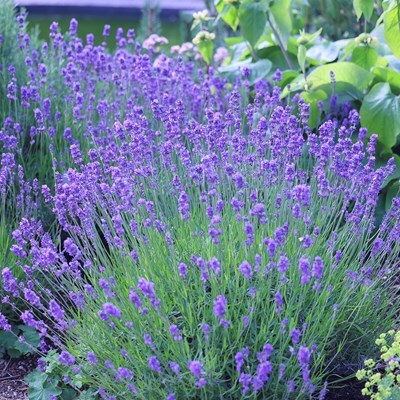
Lavandula angustifolia 'Munstead' — Jul-Sep
Named after Gertrude Jekyll’s garden, this compact English lavender reaches 45cm with a 60cm spread. Blue-purple flowers from July to September above silver foliage.
Munstead is a classic English lavender with silvery evergreen foliage
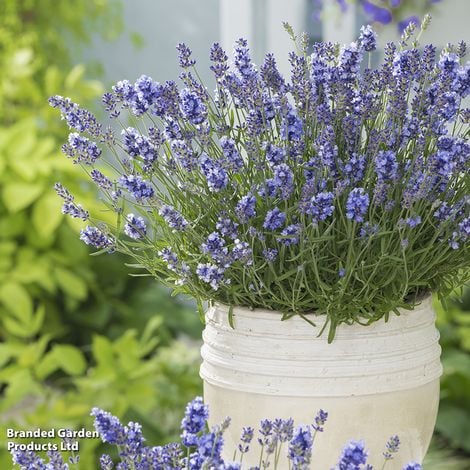
Lavandula angustifolia 'Essence Purple' — Jun-Aug
An earlier flowering option at 45cm tall, with dense rounded habit and silver foliage. The true purple-blue flowers appear from June.
Essence Purple is an early-flowering variety with true purple blooms
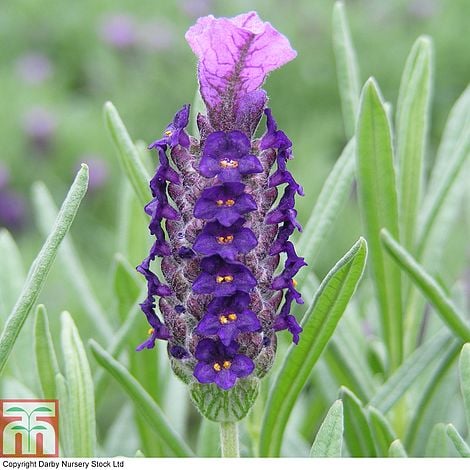
Lavandula stoechas 'Devonshire Compact' — Jun-Sep
French lavender with the characteristic “rabbit ear” bracts. Slightly smaller at 35cm, it flowers for four months from June to September-excellent value for continuous colour.
French lavenders have distinctive topped flower heads
Lavandula angustifolia ‘Munstead’ was the final choice. Its 60cm spread is generous enough to create presence when planted in a group of three, while the compact habit means it won’t overwhelm the shallow border. The classic silver foliage provides structure even when the plants aren’t flowering, and the blue-purple summer flowers establish the colour theme that runs through the whole scheme.
Early Spring Gold for Contrast
With the lavender providing summer interest from July onwards, the border needed something to carry it through spring. The obvious answer for a Mediterranean scheme is golden yellow-it creates striking contrast with purple and references the sun-baked hillsides where these plants evolved.
Three golden groundcovers emerged as strong candidates: Mountain Alyssum, Gold Basket, and Rock Rose. All three have the silver or grey-green foliage that ties them to the lavender, and all flower in that crucial early spring window before the lavenders take over.
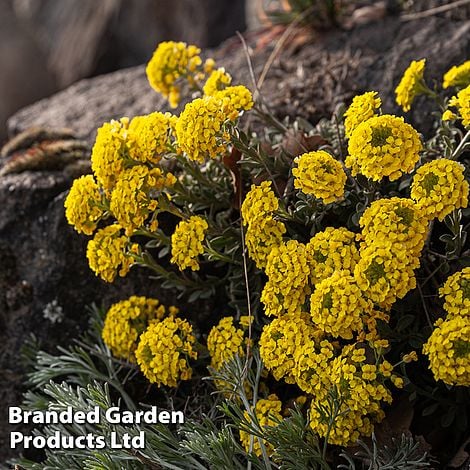
Alyssum montanum 'Mountain Gold' — Mar-Jun
Ultra-low at just 15cm tall but spreading to 50cm, this forms a carpet of golden-yellow flowers from March to June. Grey-green evergreen foliage complements lavender perfectly.
Mountain Gold spreads in a golden carpet from early spring
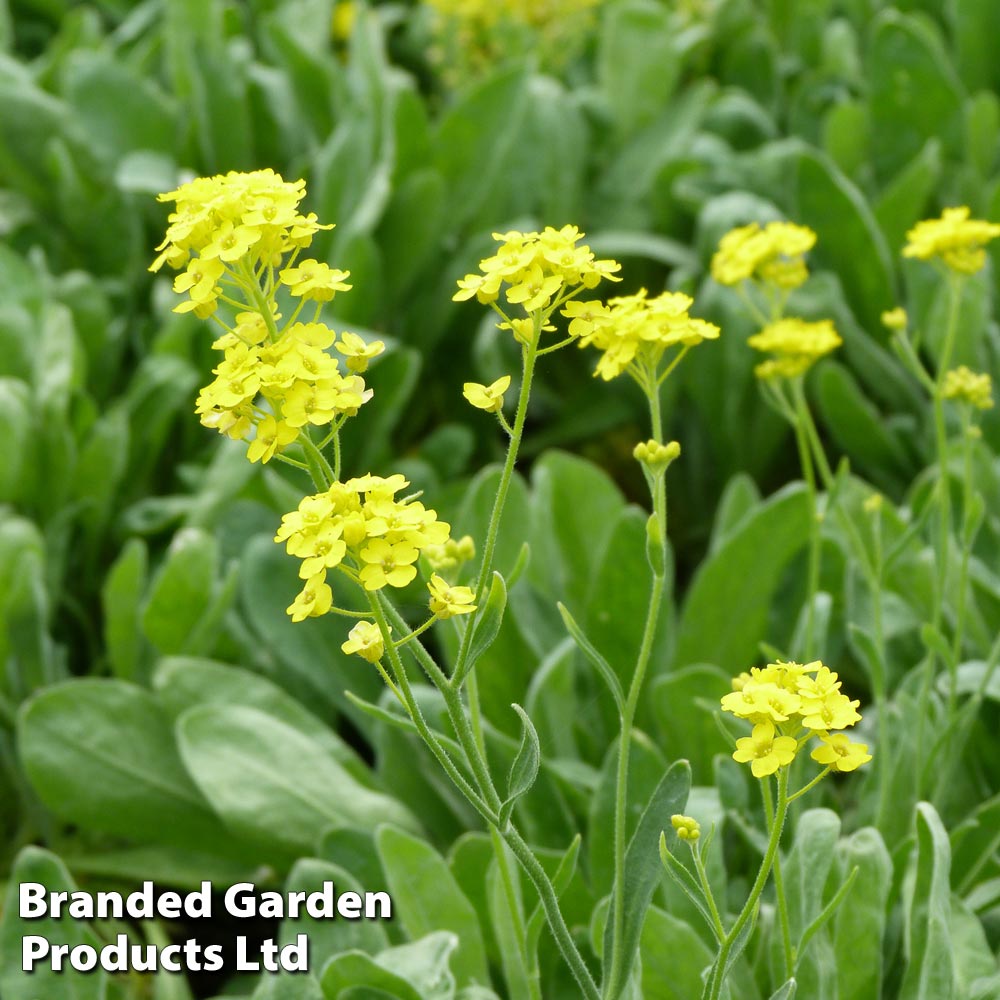
Aurinia saxatilis 'Gold Dust' — Apr-Jun
Slightly taller at 20cm with intense golden-yellow flowers from April to June. Evergreen foliage provides year-round structure in compact 20cm mounds.
Gold Dust creates billowing clouds of spring colour
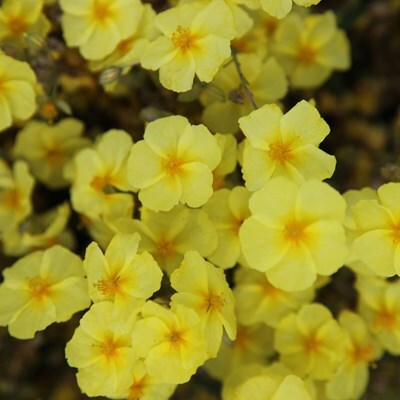
Helianthemum 'Wisley Primrose' — Apr-Jul
A spreading evergreen shrublet at 30cm tall, with grey-green foliage and soft primrose-yellow flowers from April to July-the longest flowering period of the three.
Rock Roses are evergreen shrublets with papery flowers
Alyssum montanum ‘Mountain Gold’ won out because of its timing. It starts flowering in March, a full month before the others, and continues until June when the lavender is beginning to bloom. That overlap creates a moment in early summer when gold and purple appear together-exactly the contrast the scheme was designed around. Its spreading habit also allows it to weave between the lavender bases, softening the edges and creating a more naturalistic effect.
Fine Texture with Blue Fescue
A modern scheme needs architectural grasses for movement and transparency, but the shallow border depth rules out anything tall or spreading. Blue fescue is the answer-compact evergreen mounds of needle-fine foliage in a silvery blue-green that echoes the lavender’s grey tones perfectly.
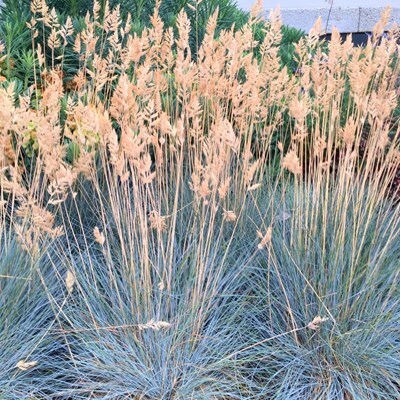
Festuca glauca 'Elijah Blue' — Jun-Jul
Compact 30cm mounds of silvery blue-green foliage that becomes more intense in full sun. Buff-blue flower plumes in June and July add subtle interest without overwhelming.
Elijah Blue forms perfect blue-silver tufts year-round
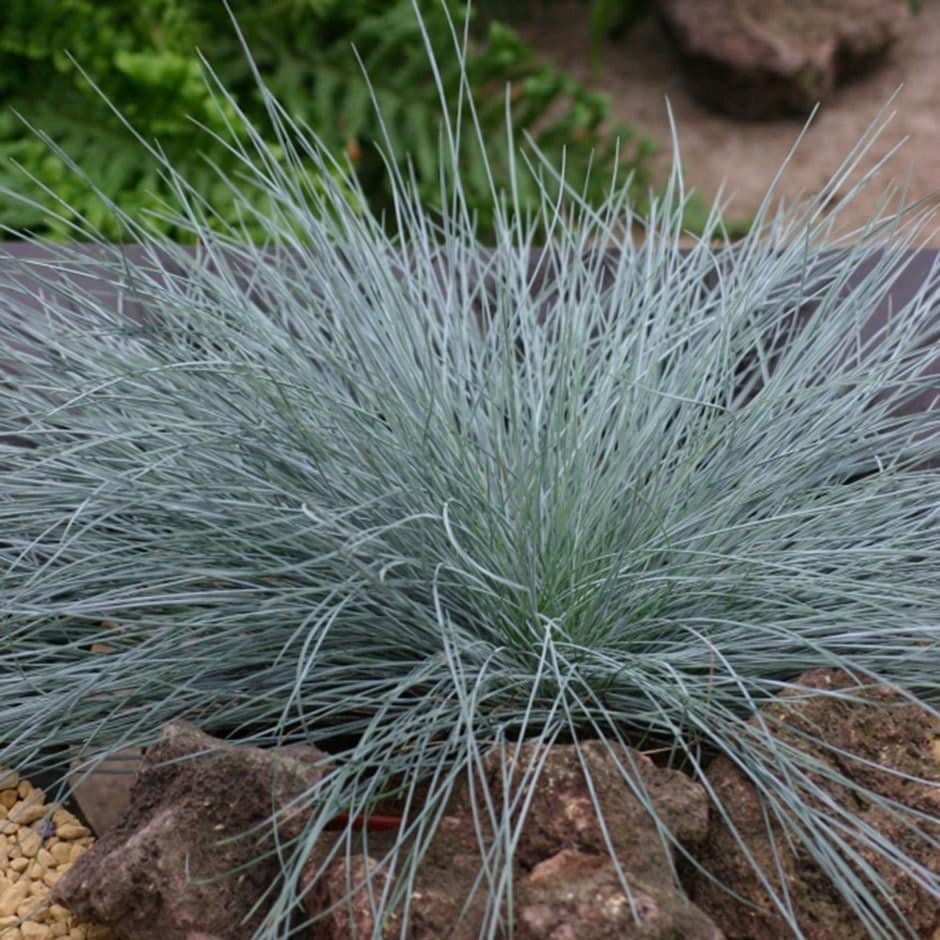
Festuca glauca 'Intense Blue' — Jun-Jul
Even more striking blue foliage than ‘Elijah Blue’, on a slightly more compact 30cm × 20cm plant. Excellent for creating bold punctuation in a modern scheme.
Intense Blue has the strongest blue colouring
Festuca glauca ‘Elijah Blue’ is a classic for good reason. Planted in groups of three or four between the lavenders, it creates a rhythm of contrasting textures-the fine needle-like grass against the broader lavender foliage. Both are evergreen, both are blue-silver, but the difference in texture keeps the scheme interesting even in winter when nothing is flowering.
Vertical Accents with Agapanthus
The border needed something taller at the back to create height variation and draw the eye upward. Agapanthus-the African lily-is ideal for Mediterranean modern schemes: architectural globes of flowers on stiff upright stems, strap-shaped foliage, and that unmistakable presence that makes them natural focal points.
The question was whether to echo the purple lavender theme or introduce white for cool modern contrast.
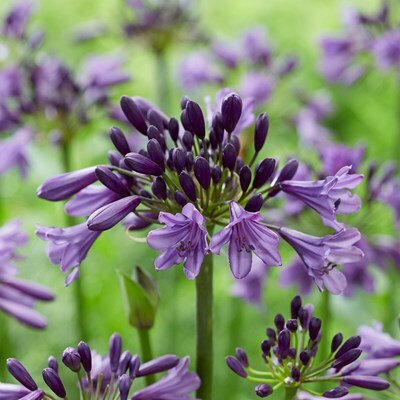
Agapanthus 'Poppin' Purple' PBR — Jul-Sep
Rich violet-purple globes on 60cm stems from July to September. Semi-evergreen foliage maintains some structure through winter. A strong purple echo of the lavender theme.
Poppin' Purple produces vivid violet blooms that echo the lavender
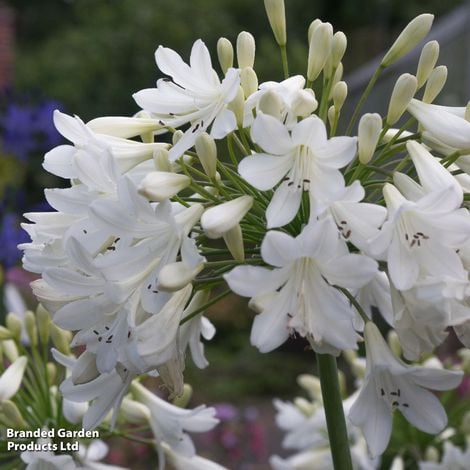
Agapanthus 'Arctic Star' — Jul-Sep
Pure white flower globes at 60cm, with grey-green foliage that echoes the fescue. Semi-evergreen and fully hardy-an excellent choice for a sophisticated modern look.
Arctic Star's white flowers bring cool elegance to the scheme
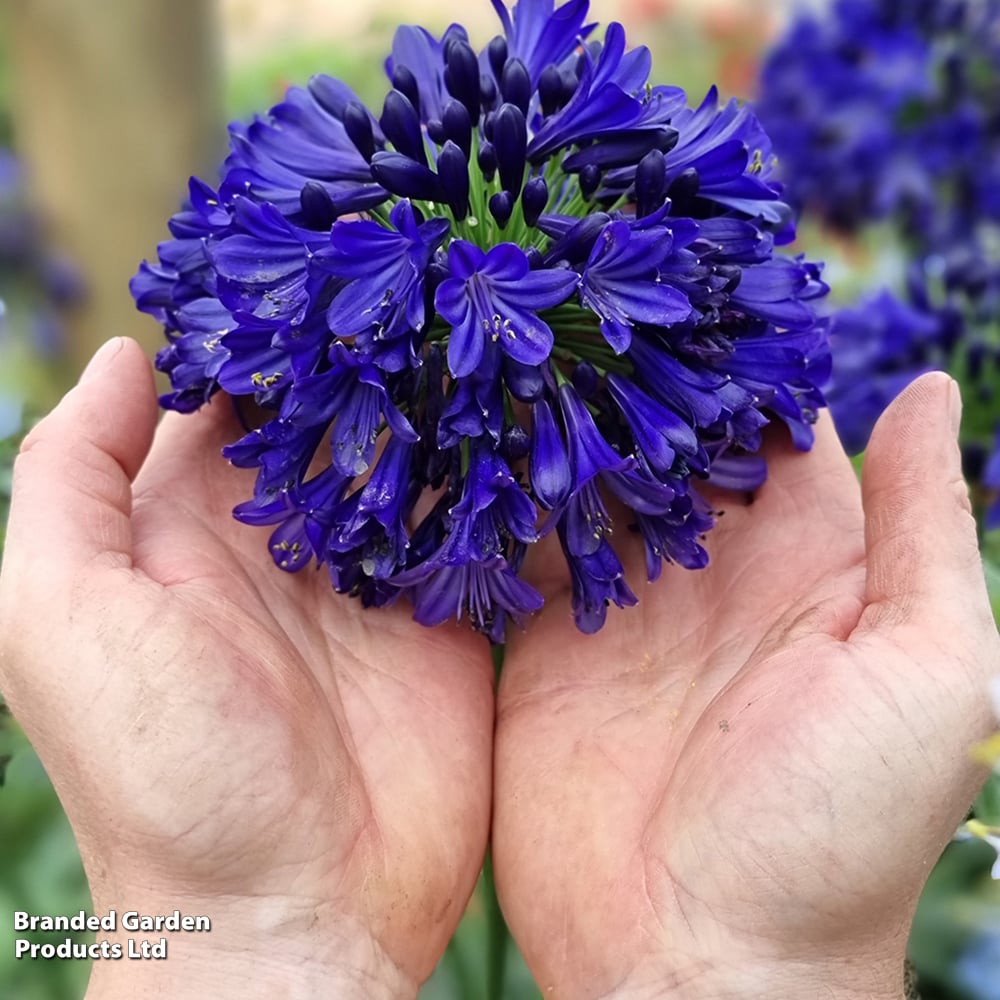
Agapanthus 'Midnight Sky' — Jul-Sep
Intense purple-blue flowers emerge from almost black buds. Compact at 50cm and fully hardy, it’s slightly shorter than the others but with dramatic colour depth.
Midnight Sky emerges from near-black buds
In the end, both Agapanthus ‘Arctic Star’ and ‘Poppin’ Purple’ made it into the scheme. The white brings that cool modern elegance and its grey-green foliage ties beautifully to the fescue, while the purple reinforces the lavender theme and provides colour continuity. Having both creates more interest than committing to just one.
Silver Groundcover for the Front Edge
The final layer needed to be ultra-low-something to carpet the front edge without hiding the plants behind it. With all that silver and purple already in the scheme, the obvious choice was lamb’s ears, which brings both in a single plant: silver evergreen foliage with subtle purple flowers.
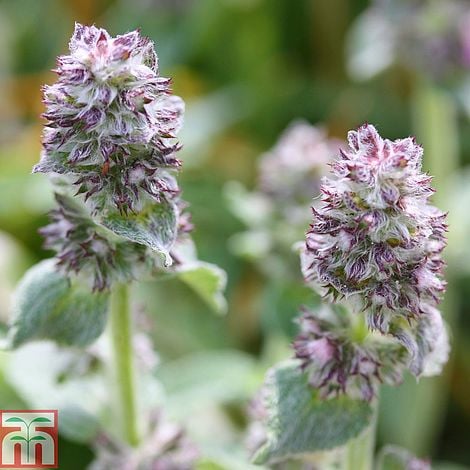
Stachys byzantina 'Silky Fleece' — Jun-Sep
Just 5cm tall but spreading to 30cm, this forms a tactile silver carpet that begs to be stroked. Small plum-purple flowers appear from June to September-subtle enough not to compete.
Silky Fleece is impossibly soft to touch
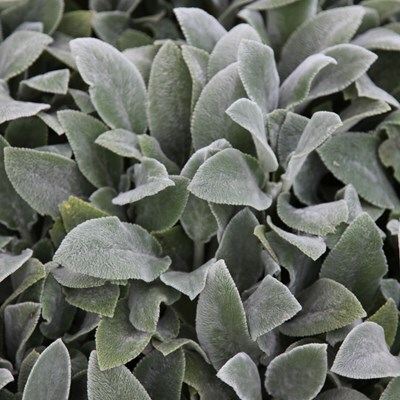
Stachys byzantina 'Silver Carpet' — Non-flowering
A non-flowering selection at 20cm tall, with silvery-white leaves forming a weed-suppressing carpet. Excellent where you want pure foliage interest.
Silver Carpet rarely flowers, focusing all energy on foliage
Stachys byzantina ‘Silky Fleece’ is irresistible. At just 5cm tall it creates a silver carpet along the front of the border, and those soft fuzzy leaves add a tactile dimension that the other plants can’t match. The subtle purple flowers in summer are a bonus-they tie to the lavender and agapanthus without shouting for attention.
The Finished Border
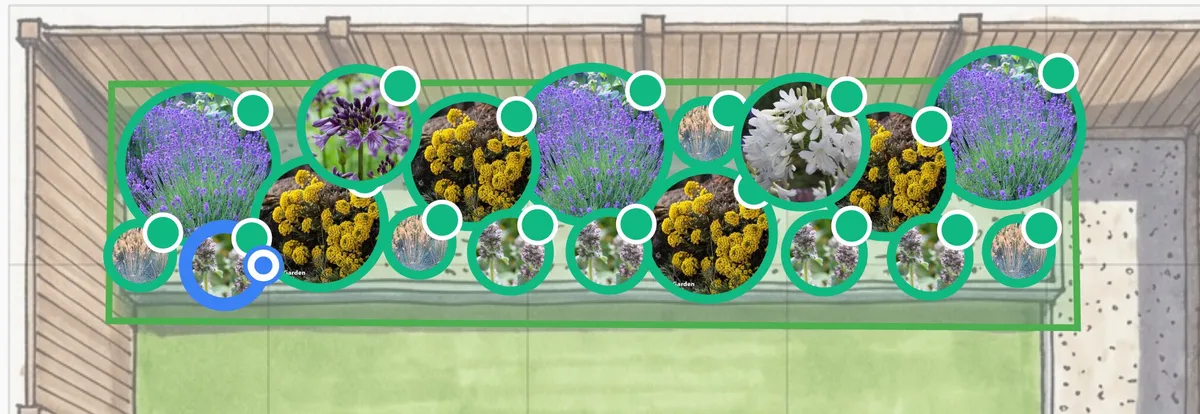
The finished border creates a coherent journey through the seasons. Golden alyssum carpets the front from March to June, overlapping with the blue fescue’s subtle flower plumes. By July the lavender and agapanthus take over, their purple and white globes rising above the silver foliage that now provides the unifying thread. Even in winter, the evergreen structure of lavender, fescue, and lamb’s ears maintains interest.
The restrained palette-silver foliage, purple flowers, golden accents-gives the border a sophisticated modern feel without becoming monotonous. The key is textural contrast: fine fescue needles against broad lamb’s ears; mounding lavender against upright agapanthus. This variety of form keeps the limited colours interesting.
For a small space getting full sun, this approach delivers maximum impact with minimal maintenance. Once established, these are all drought-tolerant plants that will thrive on neglect-no need for constant watering, feeding, or fussing. That’s the real gift of Mediterranean planting: beauty that rewards you for stepping back and letting the plants do what they’ve evolved to do.
Ready to plan your garden?
The Right Plant Right Place app can analyse your specific garden conditions and suggest plants that will thrive in your space.
Get Started Free