Transforming a Bare Shady Border: From Failure to Flourishing
How to plant a north-facing border that actually thrives

Michael Johnson
Founder & Head Gardener
Michael is the founder of Right Plant Right Place and a passionate gardener with several years of experience designing and maintaining gardens.
Expertise
- Garden design
- Plant selection for challenging conditions
- Sustainable gardening practices
- Shade gardening
North-facing borders have a reputation for being difficult, but if you choose the right plants they can be some of the most interesting spots in a garden. The key is understanding that shade isn’t a limitation to overcome-it’s a condition that certain plants have evolved to exploit. When you stop fighting the shade and start selecting for it, everything changes.
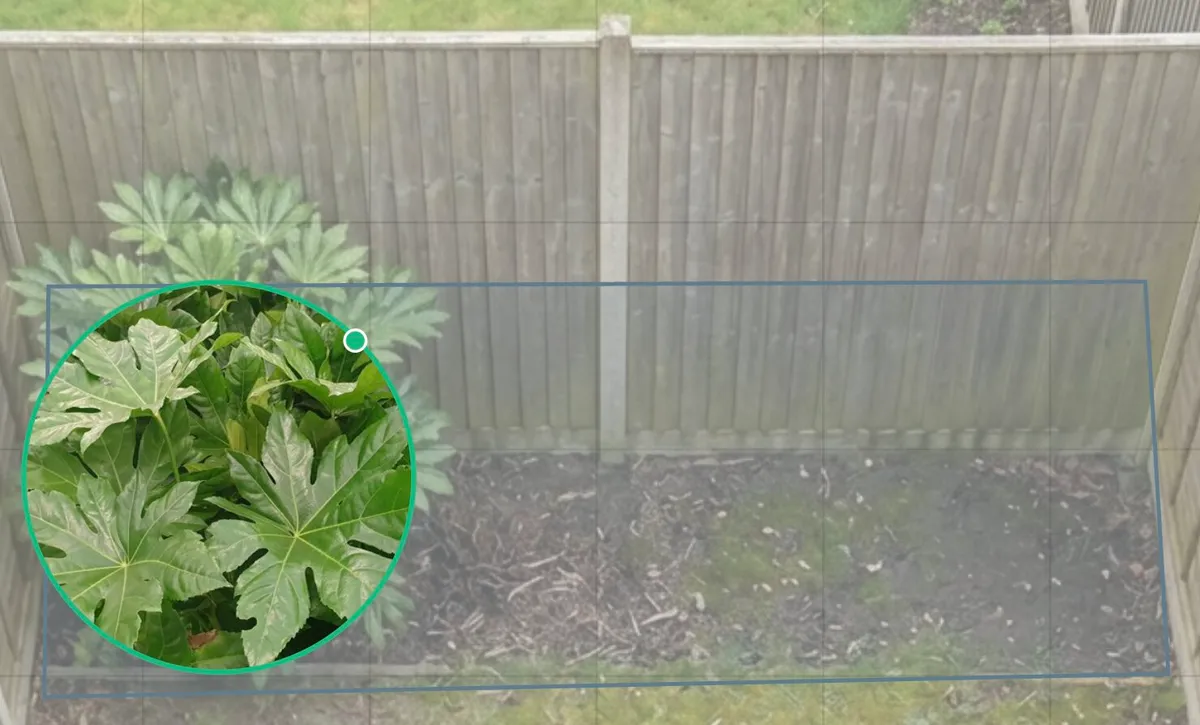
This particular border sits against a north-facing fence, receiving only 13% partial sun, with 73% partial shade and 14% full shade. It measures about 5 metres long by 1.8 metres deep, providing roughly 8.7 square metres of plantable space. The one existing plant-a Japanese aralia (Fatsia japonica)-proved the space wasn’t hopeless. If this bold evergreen could thrive here, others could too.

The Starting Point
The border had a single strength: that surviving Japanese aralia. With its large glossy leaves and white autumn flowers, it provided year-round structure and demonstrated that shade-tolerant plants could do well here. But one plant does not make a garden.
The problems were extensive. The flowering calendar showed only two months of interest out of twelve, with the aralia blooming September to October and nothing else happening for the remaining ten months. There was no front layer to define the edge, no height at the back to create depth, and only coarse texture from the aralia’s bold leaves without any fine or medium textures for contrast. The winter months-December through February-were particularly bleak with zero flowers and minimal visual interest.
Adding Evergreen Structure
With so much bare ground, the first priority was establishing more permanent structure. Evergreen shrubs provide the bones that hold a border together through winter when deciduous plants have retreated underground. For a shady border, variegated foliage offers a particular advantage: it brightens dark corners year-round, not just when the plant is flowering.
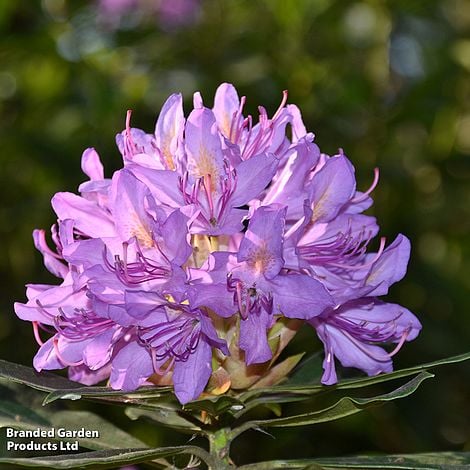
Rhododendron ponticum 'Variegatum' — May
A woodland classic with cream-margined leaves and mauve spring flowers. The variegation illuminates dark spots even when the plant isn’t flowering. Reaches 1.5m × 1.5m.
Cream-edged leaves brighten shady corners year-round
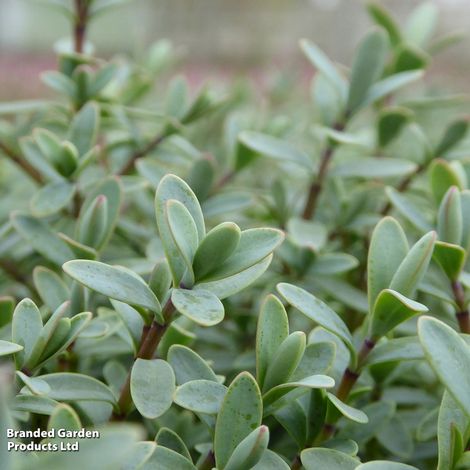
Hebe 'Silver Queen' — Jul-Sep
Gorgeous cream-variegated foliage with pale violet flowers from July to September. A compact 1m × 1m mound ideal for the front layer.
Cream-variegated foliage with summer flowers
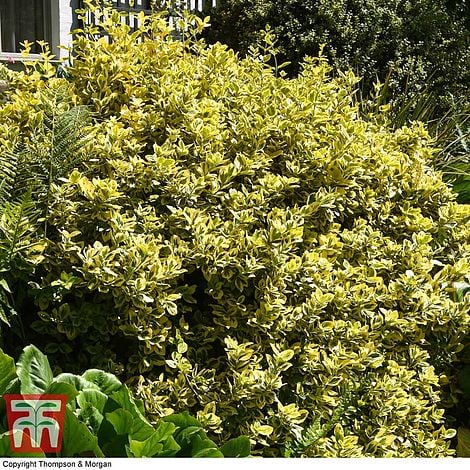
Euonymus japonicus 'Ovatus Aureus' — May-Jul
Bold golden-yellow variegated leaves that light up dark corners. Compact at 1m × 1.5m with spring and summer flowers. Very shade-tolerant.
Golden-yellow leaves that glow in shade
I chose Rhododendron ponticum ‘Variegatum’ for its ability to brighten the shade with cream-edged foliage. At 1.5 metres tall and wide, it provides substantial presence in the middle of the border while its May flowers bridge the gap between spring and summer. Hebe ‘Silver Queen’ would extend flowering into summer with its pale violet blooms, while Euonymus ‘Ovatus Aureus’ offers golden variegation for an even brighter effect-both remain excellent alternatives depending on your colour preference.
Textural Contrast with Painted Ferns
The Japanese aralia’s coarse, palmate leaves needed something delicate to play against. Without textural contrast, a border becomes visually monotonous regardless of how many plants it contains. The fern family offers some of the finest textures in the plant world, and the painted ferns bring an additional quality: their silver-flushed foliage seems to glow in low light.
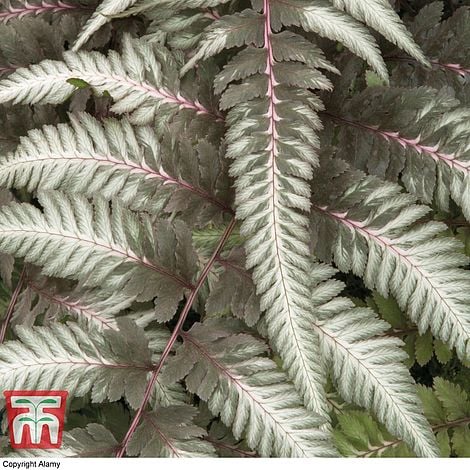
Athyrium niponicum var. pictum 'Pewter Lace'
Arching pewter-silver fronds with dramatic red stems. Spreads to form elegant groundcover at 50cm tall with a 1m spread.
Silvery fronds with beet-red midribs
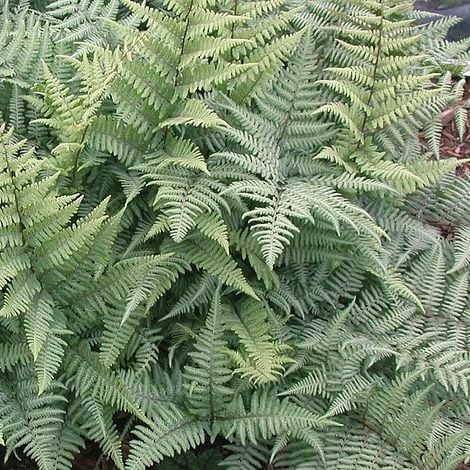
Athyrium niponicum 'Ghost'
Aptly named for its ghostly pale silver fronds. Forms a substantial mound at 60cm × 60cm and makes a statement in the middle layer.
The most luminous of the painted ferns
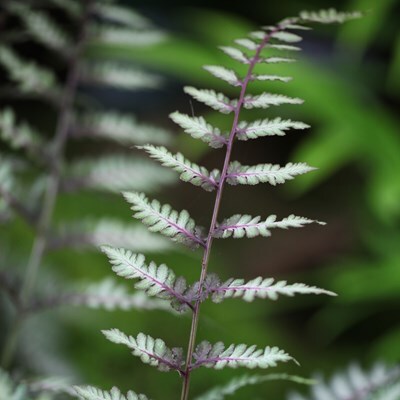
Athyrium niponicum var. pictum 'Ursula's Red'
Silver fronds with vivid purple-red stems and veins. The most colourful of the painted fern family at 40cm × 1.2m spread.
Purple-red stems add extra drama
I placed both Athyrium niponicum var. pictum ‘Pewter Lace’ and Athyrium niponicum ‘Ghost’, their silver foliage creating a luminous carpet beneath the larger shrubs. The ferns’ fine, lacy texture provides exactly the contrast the bold aralia leaves need, and their spreading habit means they’ll gradually fill the gaps between plants, knitting the border together. ‘Ursula’s Red’ with its purple-red stems would add more colour drama if that appeals-it’s the most vivid of the painted fern family.
Filling the Summer Gap
The border had no flowers whatsoever from June through August. In a shady spot, this is a common problem because many popular summer-flowering plants-salvias, lavenders, most roses-require full sun. The solution is finding shade-tolerant plants that bloom during these months.
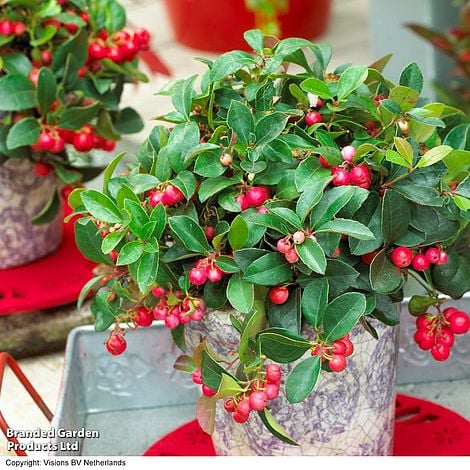
Gaultheria procumbens — Jun-Aug
A low evergreen groundcover at just 15cm tall that spreads to 1 metre. White-pink flowers in summer are followed by brilliant red berries for winter interest.
White summer flowers followed by red winter berries
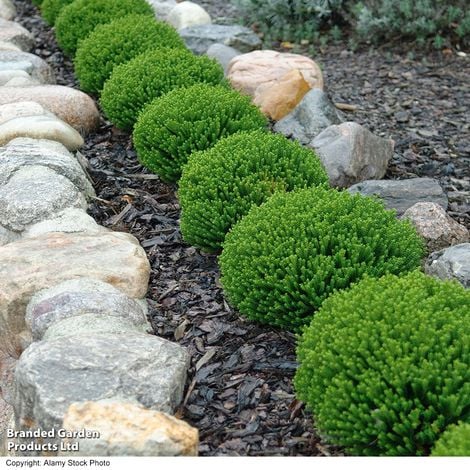
Hebe 'Emerald Green' — Jun-Aug
Forms a tight 40cm mound covered with tiny evergreen leaves. White summer flowers appear exactly when the border needs them most. Fine texture contrasts with coarse foliage.
Compact evergreen with summer flowers
Hebe pinguifolia 'Pagei' — May-Jun
Low spreading shrub at 35cm × 90cm with silver-grey leaves and white flowers. The silver foliage brightens shade even when not flowering.
Silver foliage year-round
I chose Gaultheria procumbens (checkerberry) because it solves two problems at once: white-pink flowers from June to August fill the summer gap, while red berries from December to February provide colour during the otherwise barren winter months. At only 15cm tall, it carpets the front edge without blocking anything behind it. Hebe ‘Emerald Green’ flowers at exactly the right time with its neat dome shape, while Hebe pinguifolia ‘Pagei’ offers silver foliage that works year-round-both make excellent companions or alternatives.
Height at the Back
A border needs vertical variation to feel complete. With only the aralia providing any real height, the space lacked the layered depth that makes plantings feel generous and complex. Tall perennials at the back create this depth while also providing late-season interest when many plants are finishing.
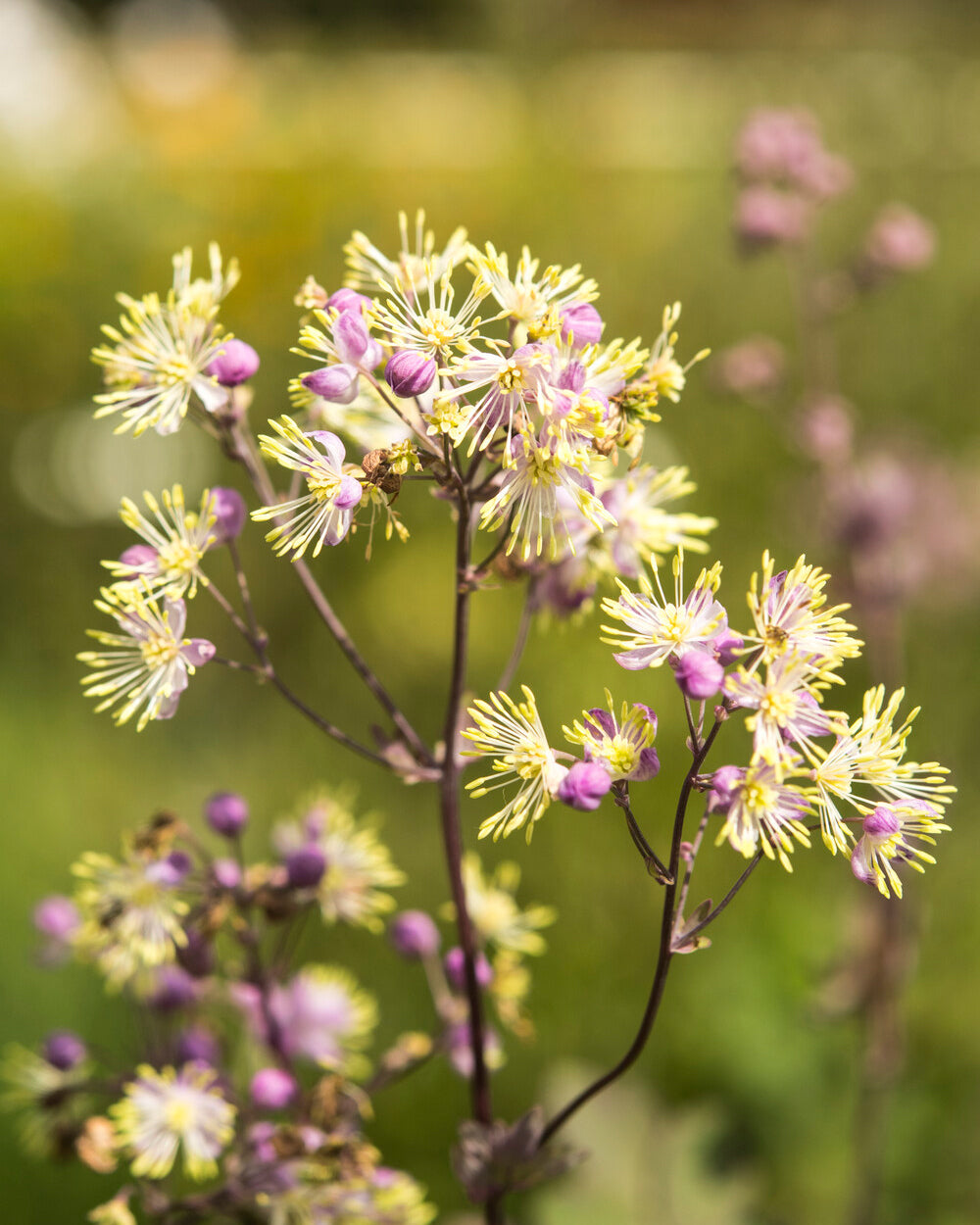
Thalictrum 'Anne' — Jun-Aug
Tiny dusky-pink flowers seem to float in mid-air on spidery dark stems. Reaches 175cm with a fine, see-through quality that layers beautifully.
Airy clouds of flowers on tall stems
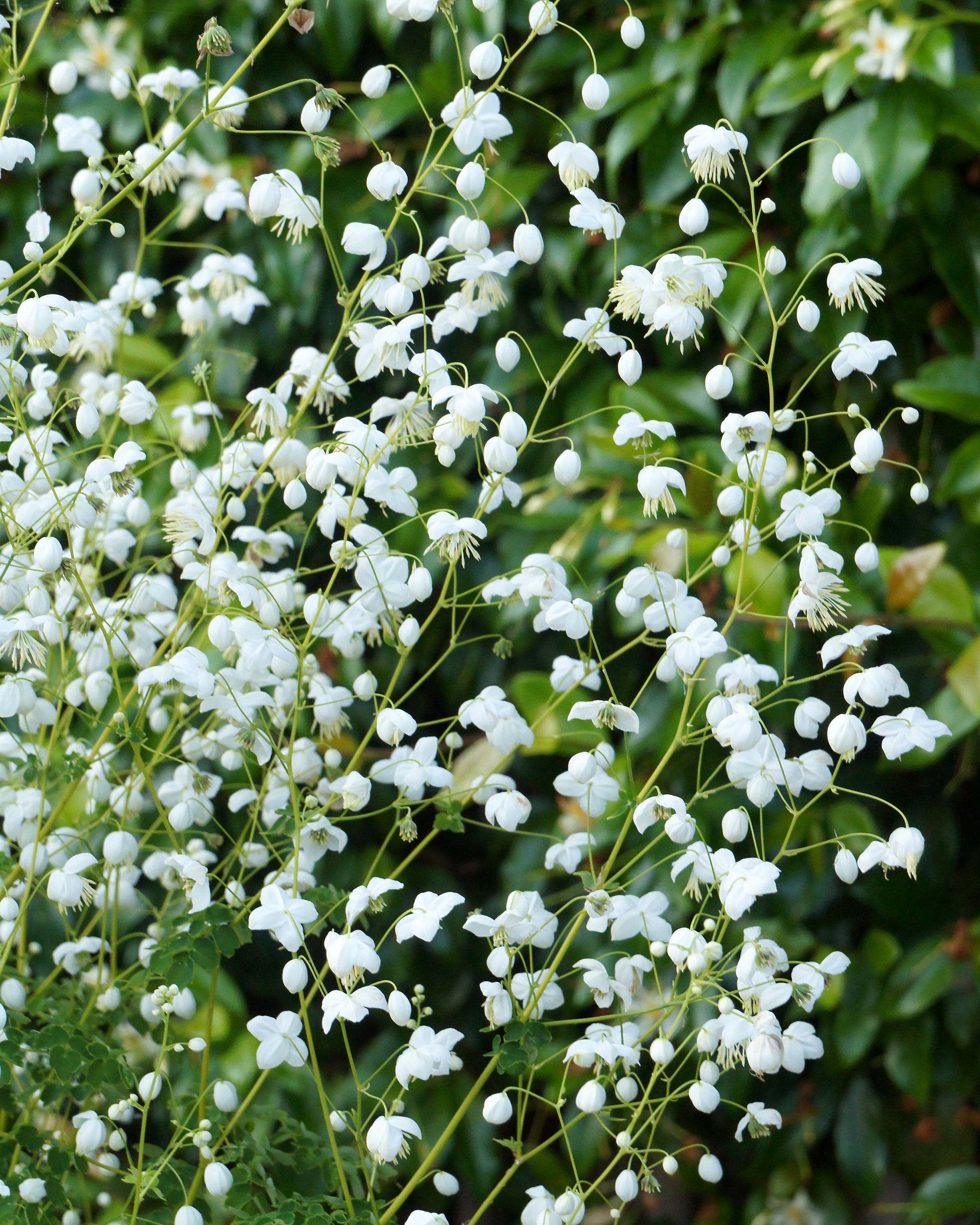
Thalictrum 'Splendide White' — Jun-Aug
Dainty white flowers on near-invisible wiry stems create a blizzard effect in midsummer. Reaches 175cm with transparent habit.
Pure white for woodland elegance
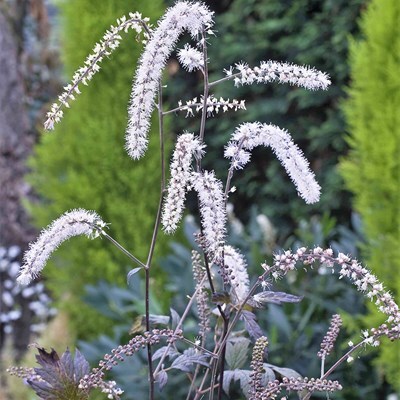
Actaea 'Queen of Sheba' PBR — Aug-Oct
Dramatic dusky purple foliage all season, topped with fragrant white bottlebrush flowers in late summer. Reaches 150cm.
Purple foliage with white flower spikes
I planted both Thalictrum ‘Anne’ and Actaea ‘Queen of Sheba’. The thalictrum brings exactly what the border needs: height without bulk. At 175cm, its fine stems and airy flower clouds hover above the middle layer, providing vertical interest while remaining transparent enough that you can see through to the plants behind. Thalictrum ‘Splendide White’ would achieve a similar effect in pure white if you prefer that cleaner look.
The actaea adds a different kind of drama. Its purple foliage provides interest from the moment it emerges in spring, and the colour echoes the purple tones of the rhododendron even when neither plant is flowering. The white bottlebrush flowers arrive in August, continuing the colour thread of white that runs through the border.
Spring Awakening
With summer and autumn addressed, the most obvious gap remained: zero flowers from March through May. The border needed spring bulbs to mark the start of the growing season and provide early colour beneath the deciduous plants before they leaf out.
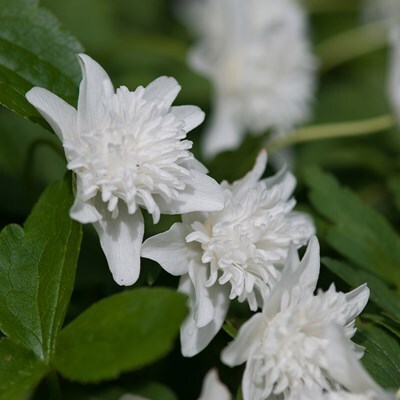
Anemone nemorosa 'Vestal' — Mar-Apr
A woodland native with unusual double white flowers. Spreads gently to create a spring carpet at 20cm tall.
Double white pompom flowers for spring
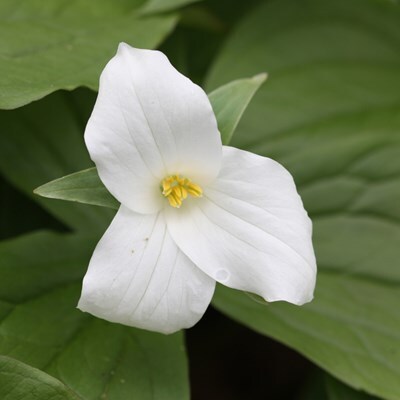
Trillium grandiflorum — Apr
Stunning three-petalled white flowers above a whorl of three leaves. A woodland gem reaching 40cm.
The American wake-robin
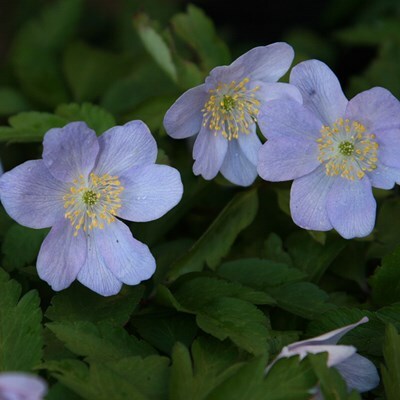
Anemone nemorosa 'Robinsoniana' — Mar-Apr
A lovely pale blue form of wood anemone that spreads to create carpets under shrubs. Difficult to find but worth seeking out.
Pale lavender-blue flowers
I chose two true woodland specialists. Anemone nemorosa ‘Vestal’ creates a delicate white carpet in March and April, its double flowers more ornate than the single-flowered species. Trillium grandiflorum adds architectural interest with its distinctive three-part structure. For a colour variation, Anemone nemorosa ‘Robinsoniana’ offers pale lavender-blue flowers that would echo the rhododendron’s mauve tones.
Both the anemones and trilliums are spring ephemerals-they flower early, then die back in summer, leaving space and resources for the later-flowering plants above them. This layering in time as well as space is one of the secrets to successful woodland planting.
Extending Into Autumn
The final consideration was extending the flowering season as late as possible. Japanese anemones are the classic choice for late-summer and autumn colour in shade, flowering from July well into October when most other perennials have finished.
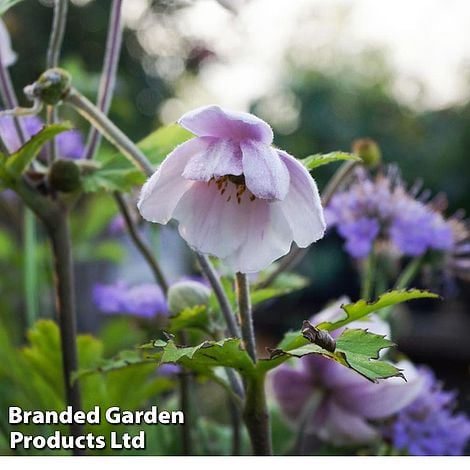
Anemone 'Ruffled Swan' — Jul-Oct
Semi-double white flowers reveal a deep lavender-blue reverse when they move in the breeze. Flowers for four months at 80cm tall.
White flowers with lavender-blue reverse
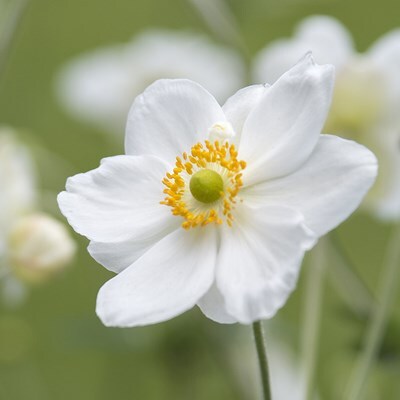
Anemone × hybrida 'Honorine Jobert' — Aug-Oct
An AGM award-winner producing masses of elegant cup-shaped flowers on wiry stems. Has been a garden favourite since 1858. Reaches 1.2m.
The classic white Japanese anemone
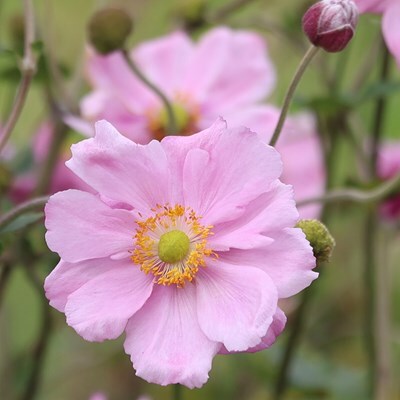
Anemone × hybrida 'Königin Charlotte' — Aug-Oct
Large semi-double pink flowers on tall stems reaching 1.5m. Semi-evergreen foliage adds winter structure.
Semi-double pink for soft colour
I chose Anemone ‘Ruffled Swan’ for its unique quality: white flowers with a deep lavender-blue reverse, so when the wind catches them they seem to shimmer between colours. The effect is subtle but adds movement and interest that pure white varieties lack. At 80cm, it fits neatly into the middle layer, and its four-month flowering season overlaps with both the summer thalictrums and the autumn actaeas.
Anemone × hybrida ‘Honorine Jobert’ is the classic choice-an AGM award-winner that has been loved since 1858-if you want pure white. For pink instead, ‘Königin Charlotte’ (Queen Charlotte) brings soft colour and semi-evergreen foliage that provides some winter structure.
The Transformation
The border now has something flowering in every month from March through October-eight months instead of the original two. The winter gap remains, though the checkerberry’s red berries and the evergreen structure of the rhododendron, aralia, and ferns provide visual interest even in the darkest months.
More importantly, the border has depth and texture. The tall thalictrums and actaeas at the back give way to the mid-height shrubs and ferns, which step down to the groundcover bulbs and checkerberry at the front. The coarse-textured aralia now has the fine-textured ferns and airy thalictrums to contrast against. The white flowers of the anemones, trilliums, and checkerberry create a coherent colour thread, while the purple foliage of the actaea and the mauve flowers of the rhododendron add richness.
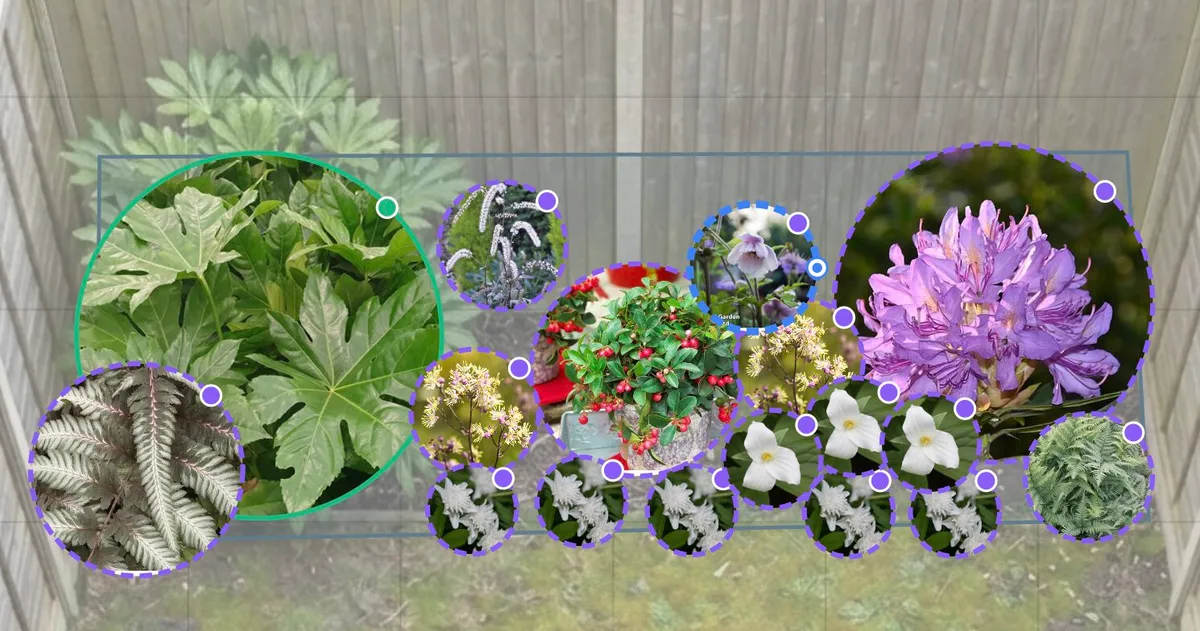
None of this required fighting the conditions. Every plant selected genuinely prefers shade-these species evolved on woodland floors where dappled light is the norm. The heavy clay soil that might kill a lavender suits the moisture-loving ferns perfectly well. The north-facing aspect that would stunt a sun-loving rose is exactly what Japanese anemones prefer.
The lesson is simple: there are no problem gardens, only wrong plants in the wrong places. Once you match plants to conditions rather than trying to force conditions to suit plants, gardening becomes dramatically easier and more successful.
Ready to plan your garden?
The Right Plant Right Place app can analyse your specific garden conditions and suggest plants that will thrive in your space.
Get Started Free